







 Biologie

4668260 / 5559751
Fette und Öle
Nutzen und Risiken
Das Verhältnis zu Fett ist zwiespältig. Die einen streichen es aus ihrer Ernährung, die anderen geben horrende Summen für kaltgepresstes Olivenöl und seltenes Arganöl aus, um gesunde Fette zu sich zu nehmen. Dabei braucht der menschliche Organismus Fett um richtig funktionieren zu können. "Schau dich schlau!" nimmt Öle und Fette wie Oliven- und Sonnenblumenöl, Butter und Margarine unter die Lupe und zeigt, warum unser Körper darauf angewiesen ist um seine volle Leistung bringen zu können. Joey Grit Winkler und Fero Andersen wühlen sich durch den Ernährungsdschungel und entlarven typische Fettfallen. Von welchen Produkten sollte man die Finger lassen, weil sie viel fetter sind als wir annehmen? Je besser ein Gericht schmeckt, desto mehr Fett beinhaltet es in der Regel. Denn Fett ist ein Geschmacksverstärker. So zum Beispiel in Käse und Wurstsorten, aber auch in Gerichten wie Pommes oder Fischstäbchen, die frittiert werden. Um nicht auf diese Leckereien verzichten zu müssen, zeigt Fero Andersen wie man richtig frittiert und dabei nicht mehr Öl als nötig verwendet. Wer mit Fett brät, läuft bei falschem Umgang schnell Gefahr, eine Explosion oder einen Brand zu entfachen. Deshalb zeigt "Schau dich schlau!", wie sich dieses unnötige Risiko vermeiden lässt und wie – sollte der Fall doch eintreten – ein Fettbrand gelöscht werden kann.
Trailer abspielen
Lehrplanzentral und an den Bildungsstandards orientiert
Passend dazu


Saisonal und gesund kochen
Selber kochen macht Spaß und mit saisonalen und regionalen Zutaten tut man auch etwas für die CO2-Bilanz.


Altersarmut
Innerhalb von 52 Jahren hat sich in der Bundesrepublik das Verhältnis von Beitragszahlern für die Rente zu den bestehenden Rentnern um den Faktor 3 verschlechtert. Sind 1962 noch 6 Erwerbstätige für die Rentenzahlung eines Rentners aufkommen, so mussten 2014 zwei Erwerbstätige für die Rentenzahlung von einem Rentner aufkommen. Die Altersarmut in Deutschland steigt. Denn nur wer 40 Jahre ohne Unterbrechung mindestens 2.100 € verdient hat, bekommt als Rente mehr als den Hartz-IV-Satz ausgezahlt. Beschäftige im Niedriglohnsektor oder in Teilzeit können selbst nach 45 Jahren Arbeit nicht von ihrer Rente leben. Vielen Rentnern bleibt nur der entwürdigende Weg zum Arbeitsamt.

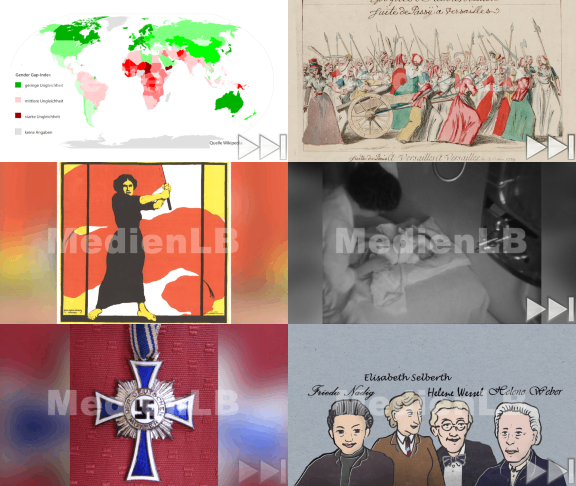
Gleichstellung der Geschlechter
„Männer und Frauen sind gleichberechtigt.“, so steht es im deutschen Grundgesetz in Artikel 3. Doch leben wir tatsächlich in einer geschlechtergerechten Gesellschaft? Wie hängen die Begriffe Gleichbehandlung, Gleichberechtigung und Gleichstellung zusammen? Wie kann die Gleichstellung der Geschlechter erreicht werden?
