







 Primary School

46500931 / 55500687
Responsible Consumption
Effect of Packaging and Advertising
What do “consumption“ and “consume“ actually mean? This is what the child reporter Ferdinand wants to find out today. That much is for sure: often it has something to do with money. Quote Ferdinand, pupil: Hi, I‘m Ferdi. I’ve just got my pocket money for this month. And, well, I’m just fancying biscuits at the moment. Let’s see if I can find something here. Ferdi wants to eat biscuits, sure. But as he cannot bake, he must buy them. On his way to the supermarket he comes across fantastic offers also in other shops. But hadn’t he better save up for some cool glasses? Here comes Axel Dammler. He is a child and youth researcher and knows a thing or two about shopping. He wants to show Ferdi how to behave as a consumer. Axel: Hello, you‘re Ferdi, aren’t you? Ferdi: Yes, I am. Axel: Hi. I‘m Axel. And you want to go shopping now, I’ve heard? Ferdi: Yes, exactly. Axel: Shopping can also be called consuming because … Let’s have a look at what it actually is and how it works. Ferdi: Okay. Axel: Can we go? Ferdi: Yeah. Axel: Well, come along. Responsible consumption – The effect of packaging and advertising Today you are going to learn what that is. How that is possible. And what you should keep in mind about it. Everywhere shops are full of goods and great offers. And we – the customers, are meant to buy or “consume“ as much as possible. The word comes from Latin and means “to use up”. So one who uses up things that he has bought is a consumer. Mostly money is needed for it. Axel Dammler: If we want to learn about consumption we have to try it out for ourselves and, possibly, make mistakes in doing so. That’s why pocket money is so important for children because with their own money children can make their own experiences … According to law, children are even allowed to decide entirely for themselves over their pocket money. That is how it is regulated by paragraph 110 of the Civil Code.
Play trailer
- <> Languages: DE, EN
- <> Target Groups: GRU
- <> Subject: Primary School
- <> Length: 22:57 min
- View in learning platform
Licenses

Curriculum-centred and oriented towards educational standards
Matching
Inclusion
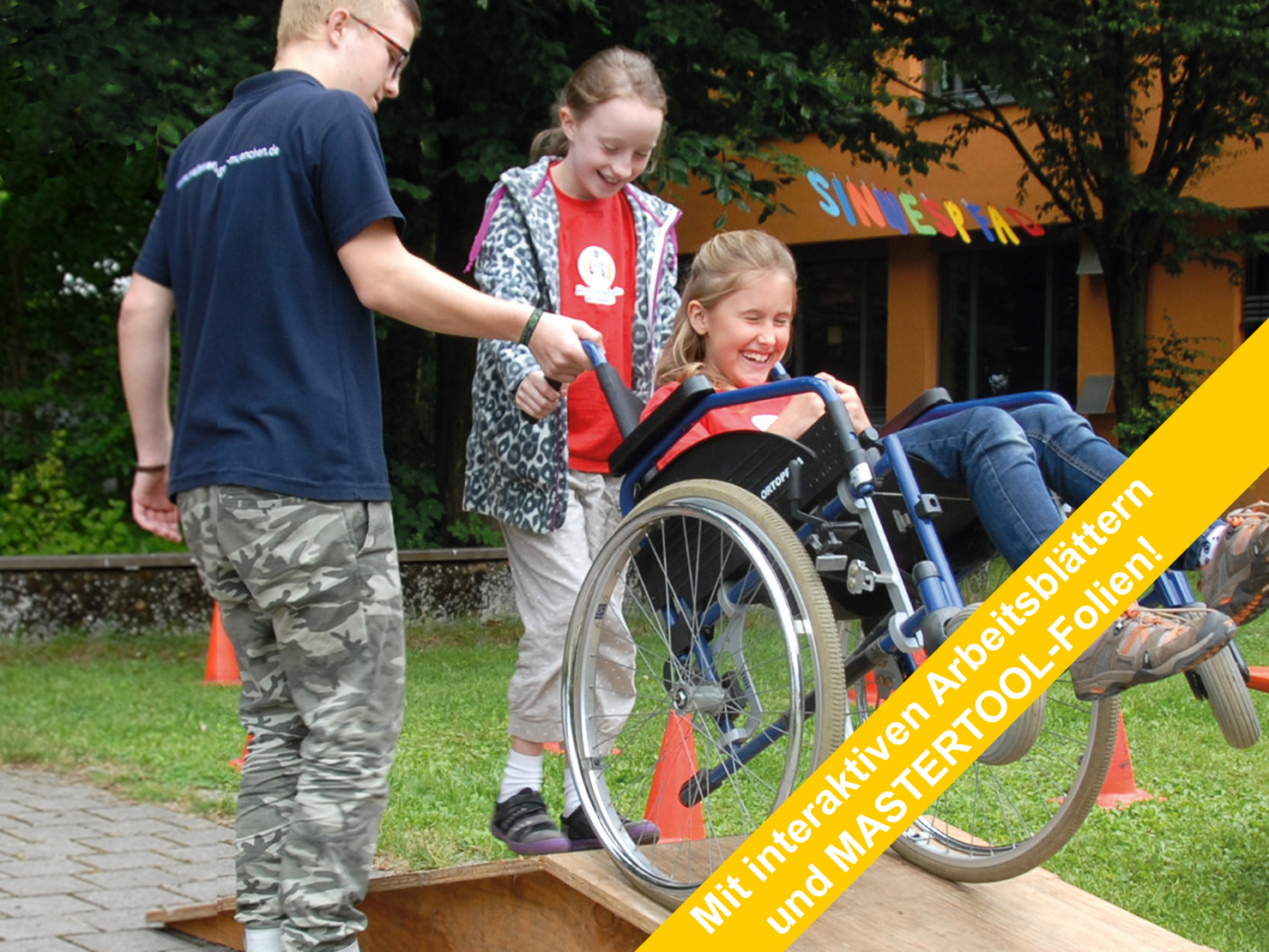
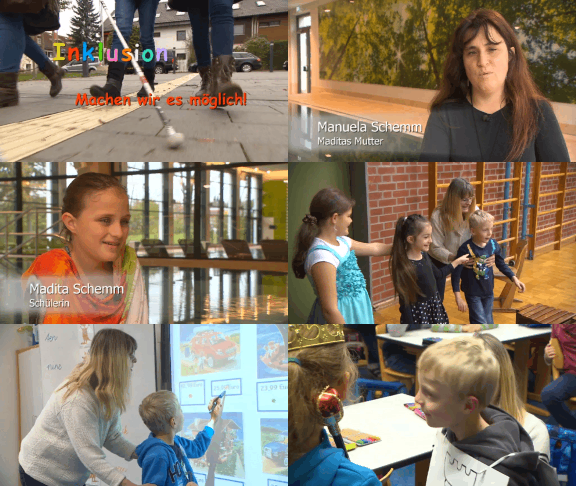
Madita is eleven and blind. She does not want to go to a special school but to a regular grammar school. She says she feels "normal" there. Jonathan is eight and has a walking disability. He likes going to the school where he lives. Here, his best friend sits next to him. Max Dimpflmeier, a teacher who is severely deaf, explains that school life is not easy. Quote Max Dimpflmeier: "You don't want to attract attention, you want to avoid saying that it is necessary for you that 70 people adjust to your situation." People on their way to inclusion.
Podcasting
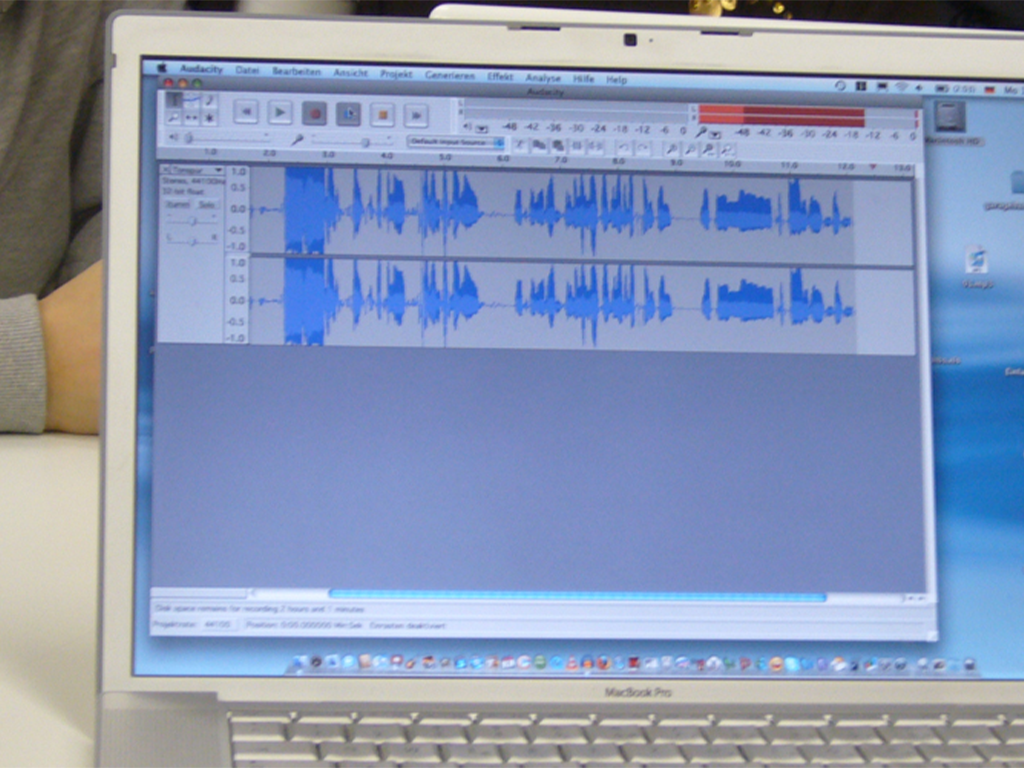
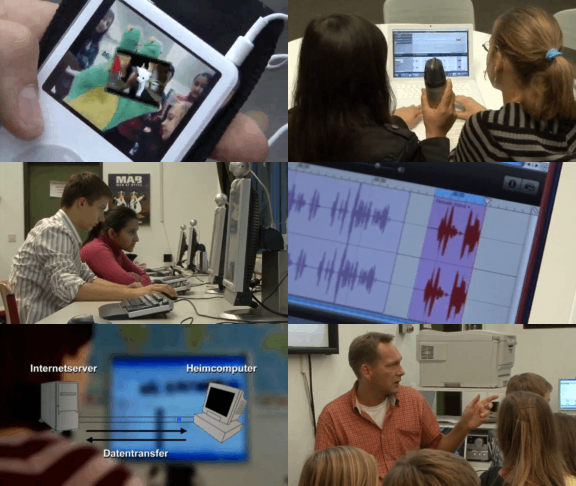
Today, the use of new media has become a matter of course not only in everyday life – schools and teaching, too, benefit from the new technologies and methods, which support active and independent learning. Especially in computer science, ethics and language courses but also in all other subjects, modern media are a valuable pedagogic and didactic asset. This DVD uses the example of podcasts to demonstrate how the possibilities opened up by new media can be applied in the classroom and how the pupils can be taught to handle them in a competent and target-oriented manner. The film is aimed at supporting the use of podcasts at school and encourages making them. This also requires the ability to find information on the Internet and assess it. The film informs on the functionality of podcasts and technical background as well as on the teaching and learning possibilities offered by podcasts – ranging from specific contents to superordinate learning targets such as the advancement of creativity and team spirit. The DVD is a useful support for teachers applying new media and wishing to show their pupils how to handle Running Time: 20:29 ms them in a sensible way.

Copyright
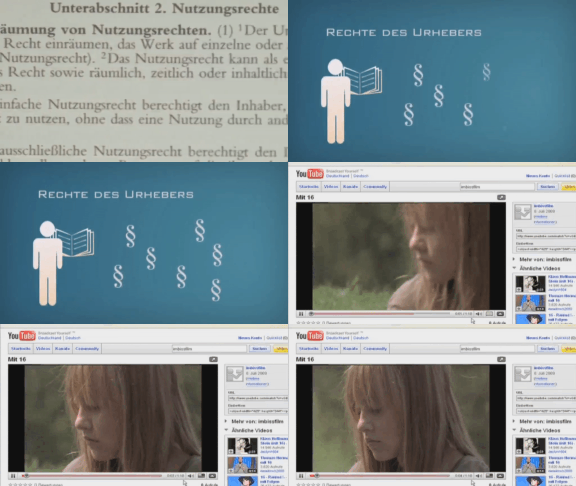
Copyright is subject to constant change to keep up with technological advances. This film enables the viewer to grasp the basic principles of this extremely intricate matter. By way of introduction, the film defines what an author is, what kinds of works there are and how long a work is protected on principle. Then the fundamental rights of an author are cited and it is shown how these are exploited in our times. In the third chapter, the respective rights are illustrated by way of practice-oriented examples of books, photos, music and films. Here, of course, an emphasis is laid on the field of education, taking into account the latest case law within the EU and Austria in particular. A further chapter highlights the problems arising with the Internet and goes into the citation law and pirate copies. All in all, in this way the viewer is made familiar with the most important basic terms and their meanings. Comprehensive worksheets and additional accompanying material invite us to deepen our knowledge of the subject.