







 Physics

46503508 / 55502982
Gravity
Attraction of masses
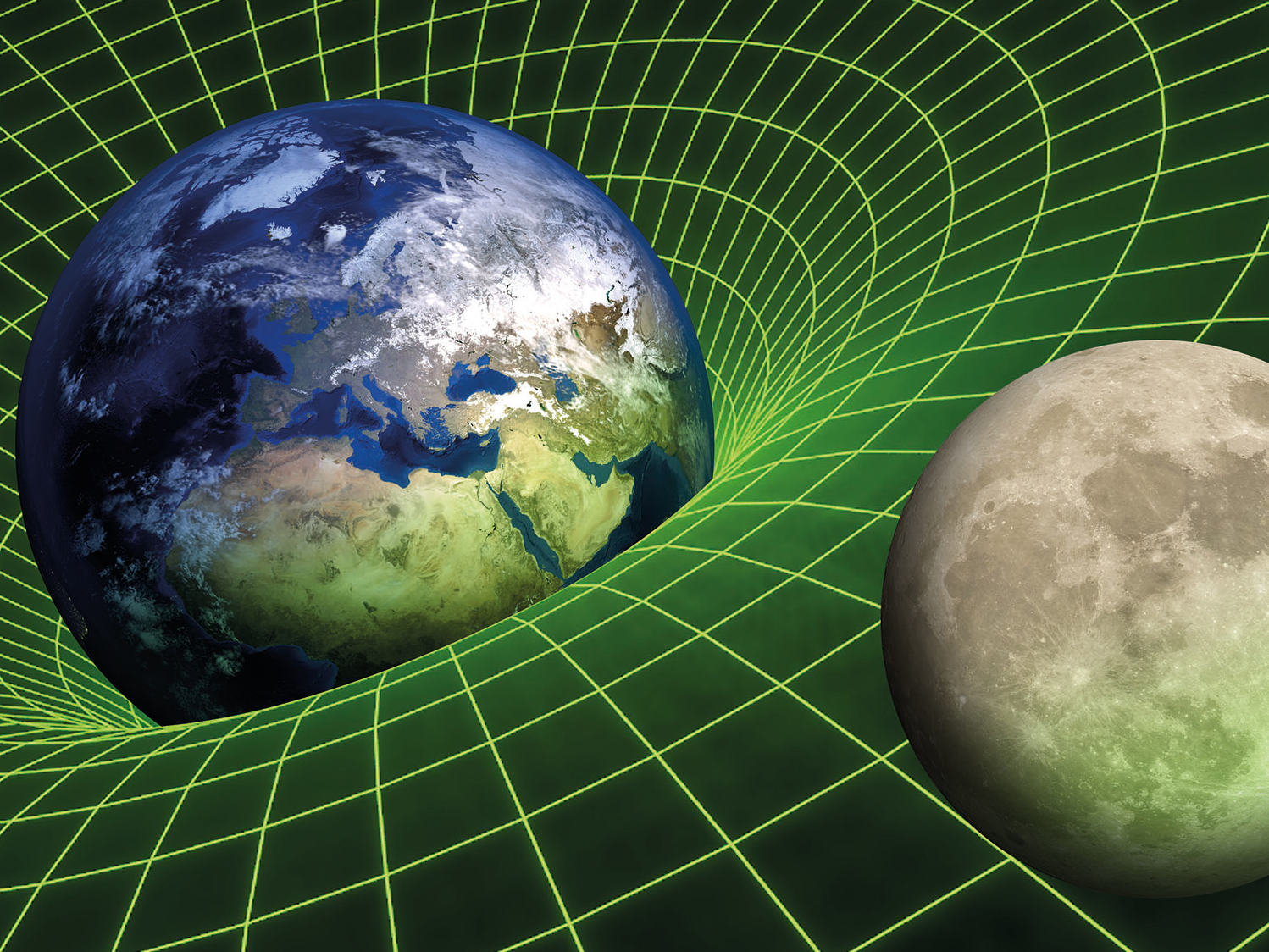
Gravity is the force that pulls something to the ground. It ensures that everything falls downwards. Like every force, it has a direction, namely towards the centre of the celestial body. The film vividly shows the development of the law of gravity from Isaac Newton through the further development by Albert Einstein, who described that gravity not only causes bodies to attract each other, but also causes space to curve around a body. Space and time are no longer absolute, fixed quantities, but changeable. In this context, astrophysicist Harald Lesch explains very impressively how black holes are created and how the orbits of planets depend on gravity. In combination with the extensive additional material (classic and interactive worksheets, glossary, test questions), the medium can be used excellently in lessons. Glossary, interactive tasks and test questions were created with H5P and can be used without additional software. In the detailed data section of the DVD 88 pages of teaching and accompanying material, of which: 23 pages of worksheets and supplements with solutions 17 test questions 10 Interactive tasks
Play trailer
- <> Languages: DE, EN
- <> Target Groups: Sek I
- <> Subject: Physics
- <> Length: 30:33 min
- View in learning platform
Licenses

Curriculum-centred and oriented towards educational standards
Matching


Mobile Learning II
Oh, what’s that? Original soundtrack Thissen: “As our children grow up in a media world and naturally handle the media, they should also be a topic in school.“ An older child says the point is that they don’t just load down apps but create things themselves that haven’t existed so far. Hi, I’m Jana. A propeller hat. I’ll put it on. Now I’m no longer a simple rhino, but a flying rhino. Original soundtrack Thissen: “It’s exactly the great flexibility of tablets that promotes very personalised and adapted learning.” Original soundtrack Welzel: “It’s fascinating to see how the children grow with their products and how they always want to improve them.” The Westminster Abbey is a church in London for the royal family. Original soundtrack Welzel: “And?“ They think it is ok.
The Daily Newspaper
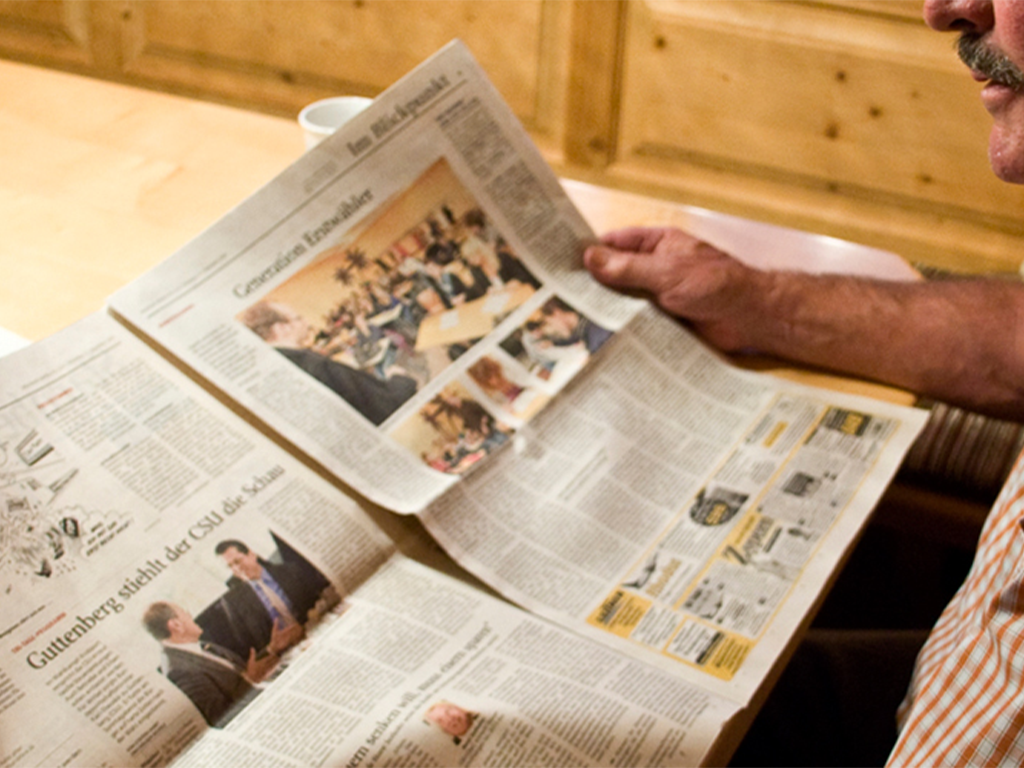
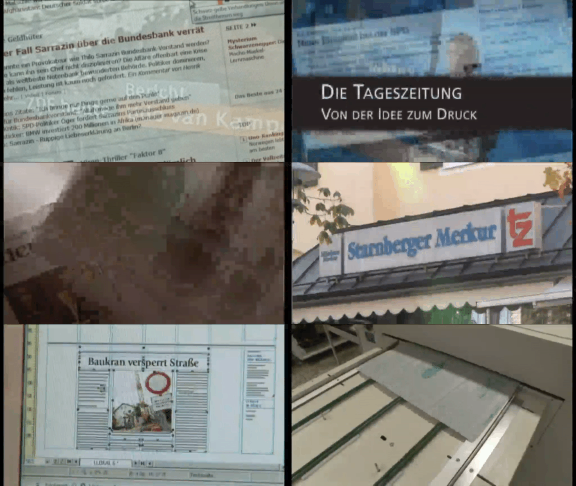
Every day, there is a surge of news reaching us via different news channels. In spite of TV and Internet, the daily paper still is one of the most important main sources of news. But how is a newspaper created? The film shows the production of a paper in the course of one day. Starting with the editorial meeting in the morning, in which the topics and deadlines are determined, the film accompanies a journalist during her research work. You can see how a journalistic interview is conducted and what the photographer must consider when taking a press photo. Back in the editorial office, the editor’s work is illustrated, which includes the page layout and the writing of an online article in today’s time. Impressive pictures from the printing centre depict the process from the digital page to the finished newspaper. Together with the comprehensive accompanying material, the DVD is perfectly suited for use at school
Podcasting
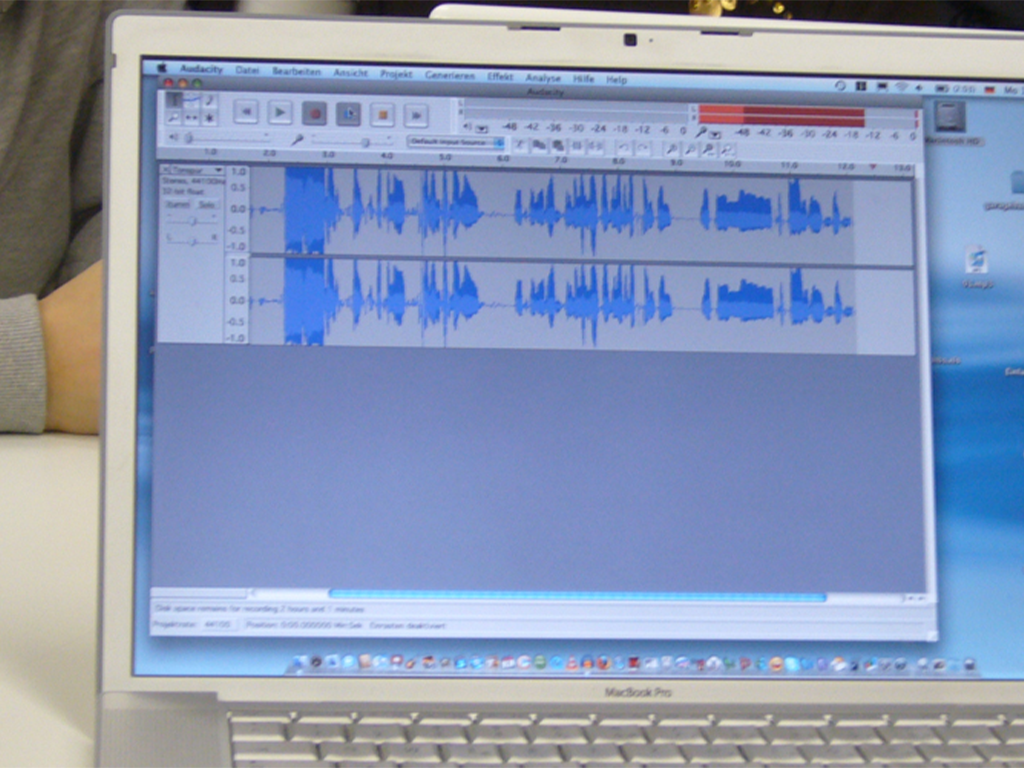
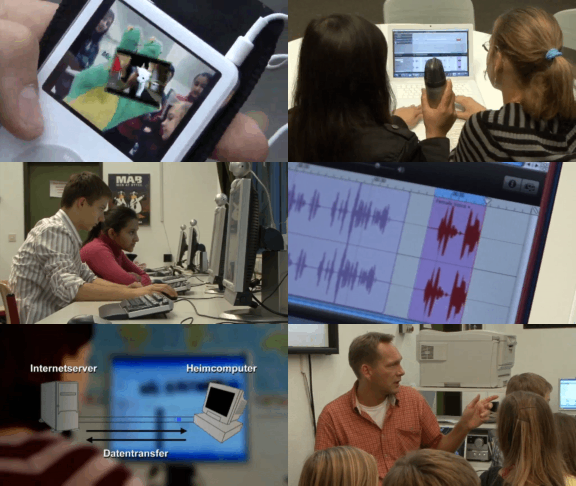
Today, the use of new media has become a matter of course not only in everyday life – schools and teaching, too, benefit from the new technologies and methods, which support active and independent learning. Especially in computer science, ethics and language courses but also in all other subjects, modern media are a valuable pedagogic and didactic asset. This DVD uses the example of podcasts to demonstrate how the possibilities opened up by new media can be applied in the classroom and how the pupils can be taught to handle them in a competent and target-oriented manner. The film is aimed at supporting the use of podcasts at school and encourages making them. This also requires the ability to find information on the Internet and assess it. The film informs on the functionality of podcasts and technical background as well as on the teaching and learning possibilities offered by podcasts – ranging from specific contents to superordinate learning targets such as the advancement of creativity and team spirit. The DVD is a useful support for teachers applying new media and wishing to show their pupils how to handle Running Time: 20:29 ms them in a sensible way.