







 Politics / Civics, Primary School

4669649 / 5560319
Children Have Rights
UN Convention on the Rights of the Child
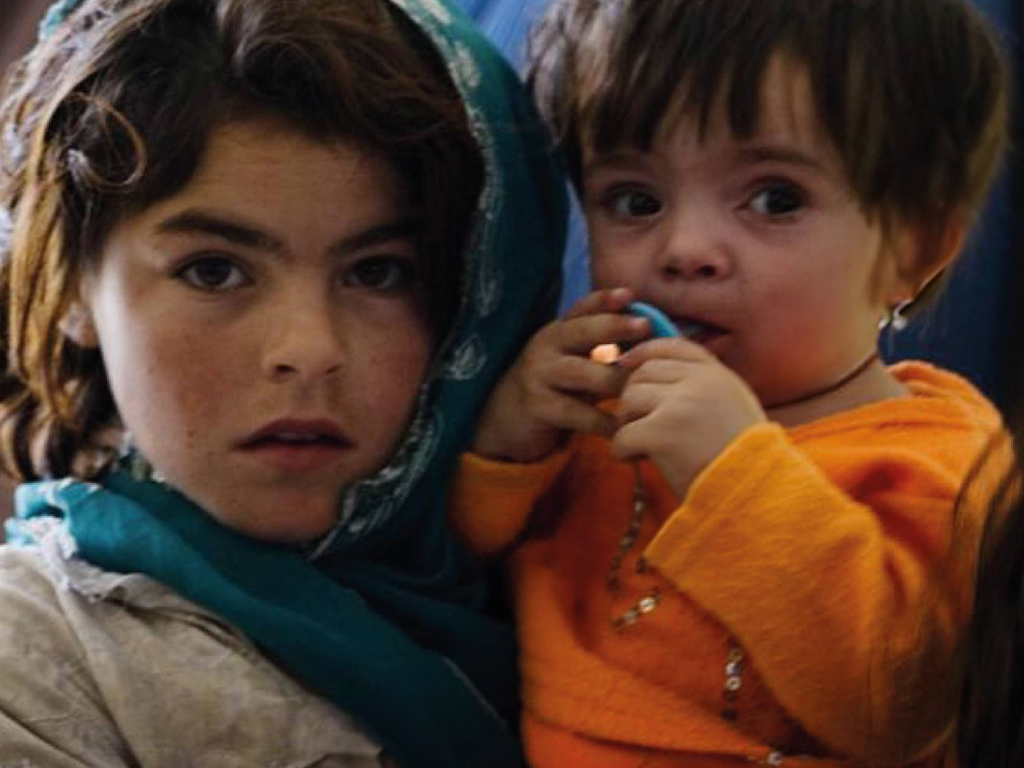
Every human being has rights. Children have children’s rights. Since 1946 the UN – the United Nations – has been working to safeguard these rights. On 20th November 1989 it was adopted: the UN Convention on the Rights of the Child. People in every country, every culture and in all religions work together to implement these children’s rights for all 2.2 billion children of this world: Children’s rights are of prime importance for a world where peace, fairness, security and respect for the environment prevail. We owe our children the very best we can give. Children need special care and protection. A contract is intended to ensure this. Since 1989, in other words for almost 25 years, the UN Convention on the Rights of the Child has existed. In 54 articles it establishes the very specific rights for children. 192 countries of the world have accepted and ratified this agreement. Only two countries have not: the USA and Somalia...
Play trailer
- <> Languages: DE, EN, TR
- <> Target Groups: FÖ, GRU, Sek I
- <> Subject: Politics / Civics, Primary School
- <> Length: 17:24 min
- View in learning platform
Licenses
Curriculum-centred and oriented towards educational standards
Matching

Air Traffic
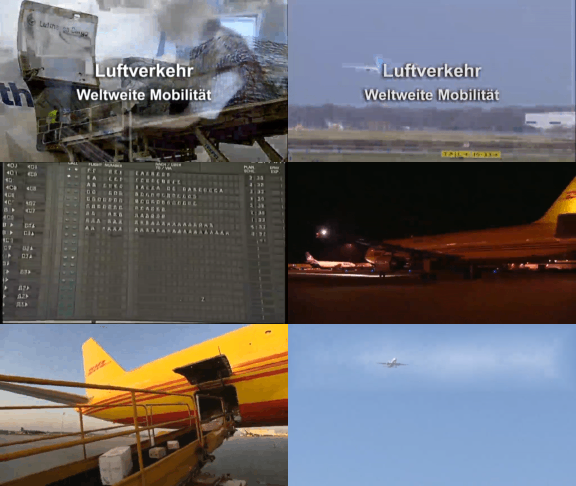
Being able to fly has been a dream of humanity from time immemorial. But it does not even date back a century that people actually started being able to travel through the air. Since the 1960s, the number of flight passengers has been constantly increasing. Thus, the airspace is no longer dominated by birds but by man-made flying objects.
Ceramic
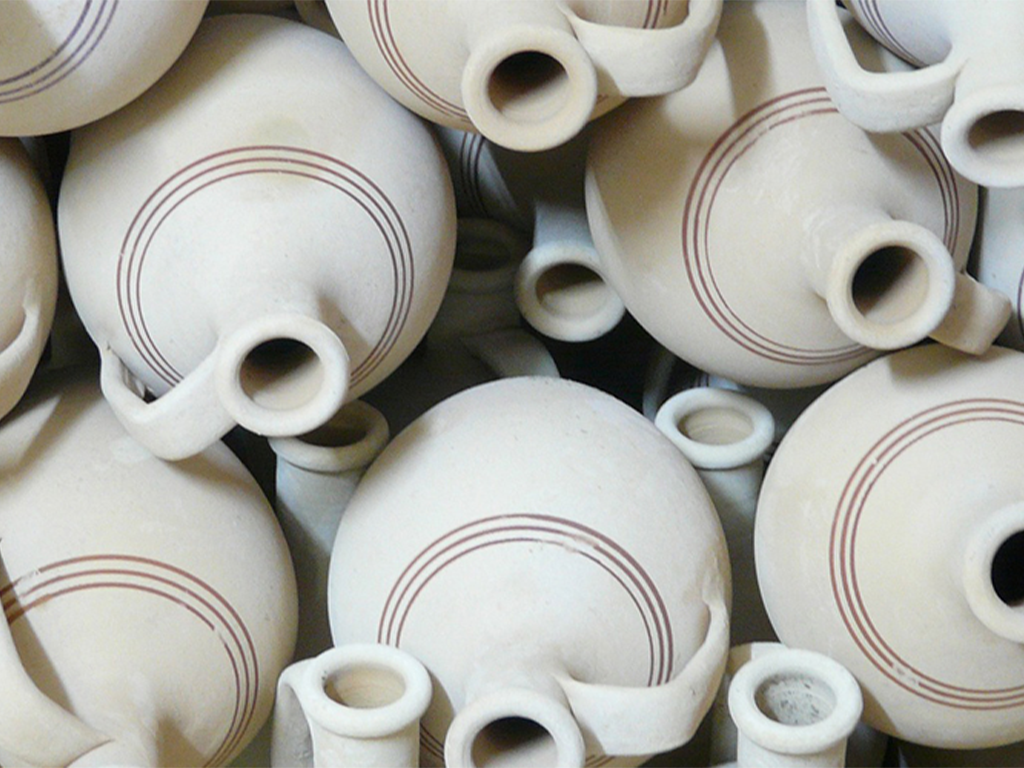
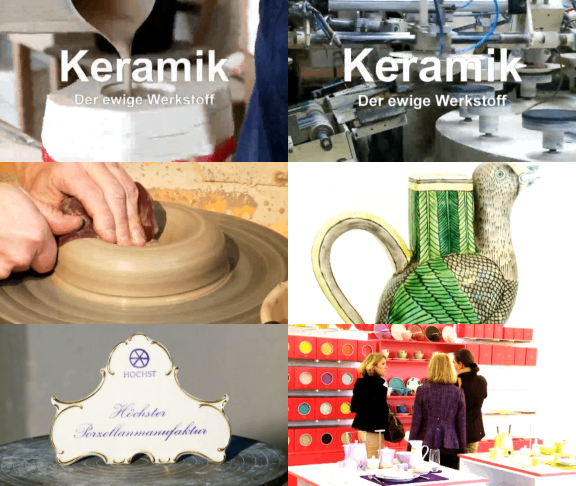
Ceramics are indispensable in our everyday lives. We eat from ceramic plates, drink from ceramic cups, use tiled ceramic bathrooms. But how is ceramic manufactured? The film reveals the secrets of this fascinating material! We get to know more about the beginnings of ceramic in the Old World of Egypt and Mesopotamia, about Greece, China and Rome. We gain interesting insights into the valuable earthenware and are also shown the exquisite further development of the "white gold". Today this versatile material is irreplaceable in industry, too. Whether in space or as an easily compatible substitute in medicine, ceramic is applied in many places.

Part Time Kings
Your children are not your children