







55502492
Säuren und Basen
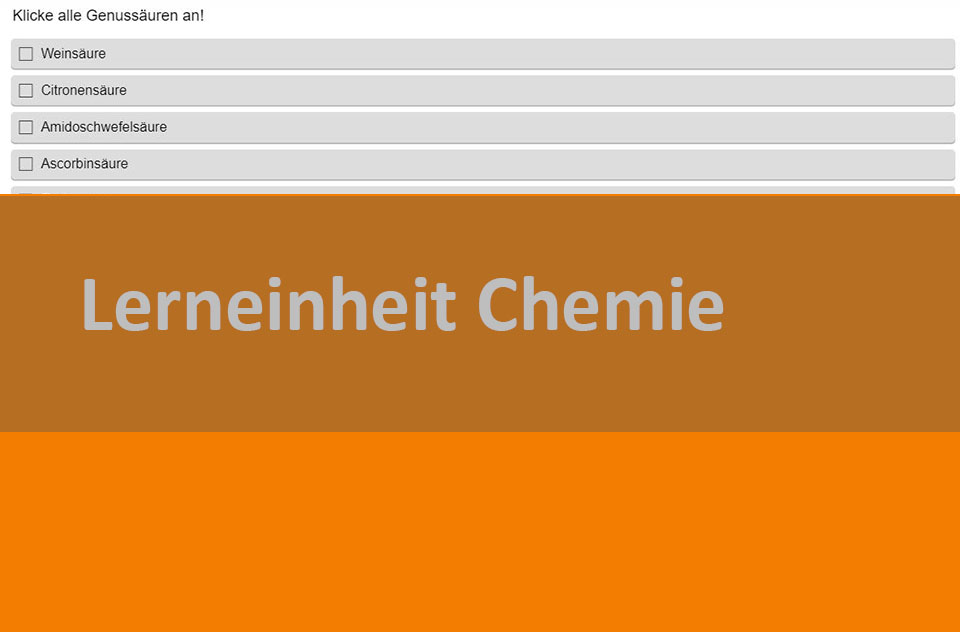
In 11 interaktiven Modulen und in interaktiven Videos wird Wissen zu Säuren und Basen vermittelt und abgefragt.
Das Medium bietet H5P-Aufgaben an, die ohne zusätzliche Software verwendbar sind.
Durch interaktive Aufgabentypen wird das audiovisuelle und interaktive Lernen einfach.
Lernen macht jetzt Spaß!
Included Tasks
- I Säuren und Basen - Lückentext
- II Säure oder Base? interaktive Aufgabe
- III Eigenschaften von Säuren und Basen - interaktive Aufgabe
- IV Säuren im Alltag - interaktives Video
- V pH-Wert-Farbskala - interaktive Aufgabe
- VI Basen im Alltag - interaktives Video
- VII Von Brønsted zu Lewis - Lückentext
- VIII Begriffe im Buchstabengitter - interaktive Aufgabe
- IX Wirkungen - interaktive Aufgabe
- X Säuren und Basen - Interaktive Aufgaben
Curriculum-centred and oriented towards educational standards
Matching

Alkali Metals
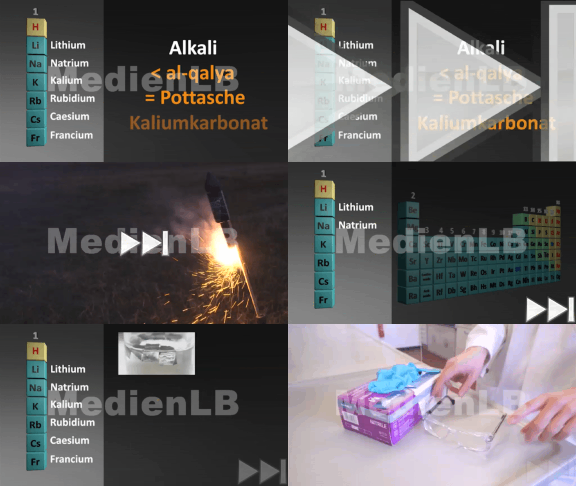
What do lithium batteries, table salt and firework rockets have in common?

Halogens
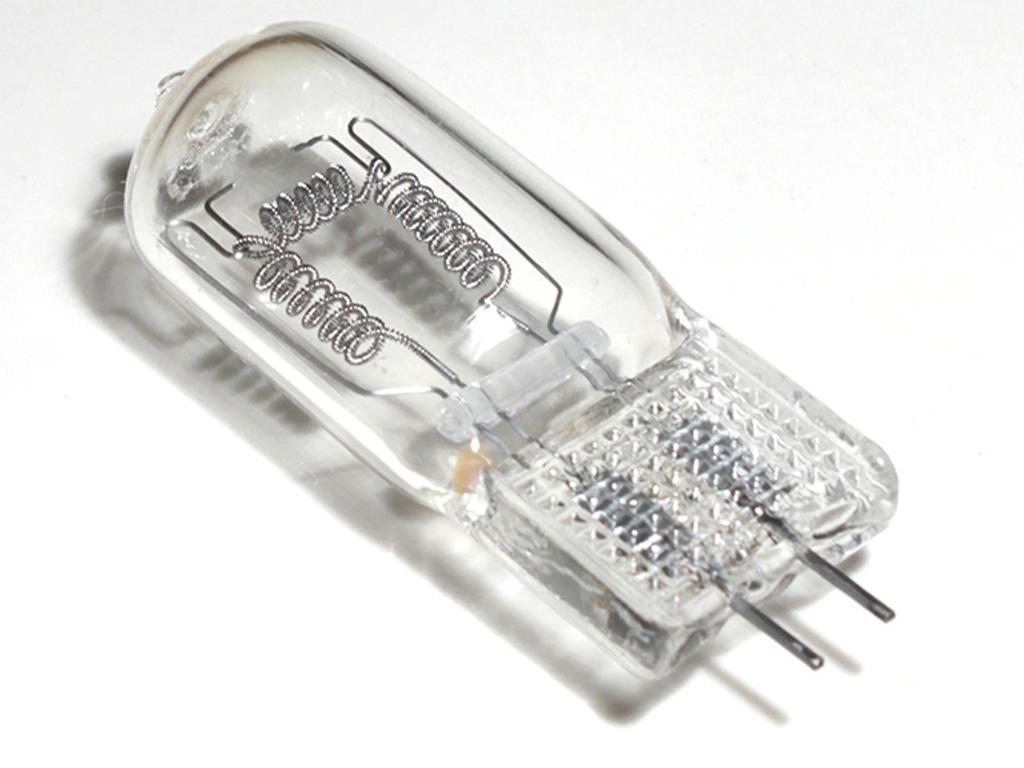
The compounds of halogens are - with the exception of astatine - widespread, can be encountered in nature and are versatile substances. This fact is taken up on this DVD in order to teach the students the chemistry of the halogens by illustrating their special qualities and explaining the correlation of their structure with their chemical properties. In the first part, an overview of the element group of halogens lays emphasis on the common as well as on the distinguishing characteristics of fluorine, chlorine, bromine and iodine. In a second part, the specific properties of fluorine and chlorine are presented. This topic is linked to the students‘ everyday experience (fluorine as a protection against caries, chlorine as a disinfectant, etc.) on the one hand. On the other hand, the DVD presents carefully selected experiments. As a rule, they are of a kind that can only be realized with difficulty, or high expenditure in the chemistry classroom. With the help of these experiments, students are introduced to the chemistry of the halogens in a way that enables them to draw conclusions on the basis of their observations.
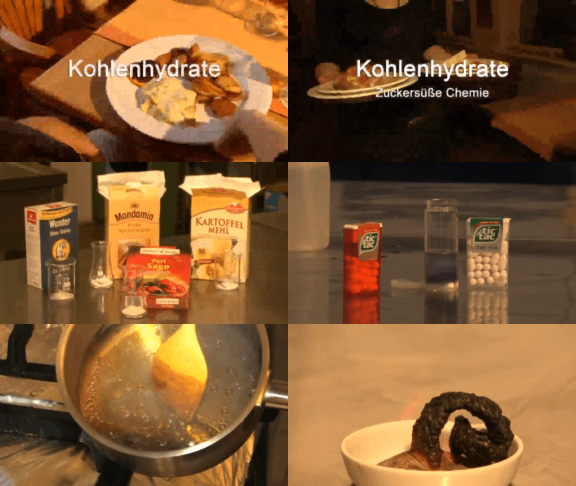
Carbohydrates
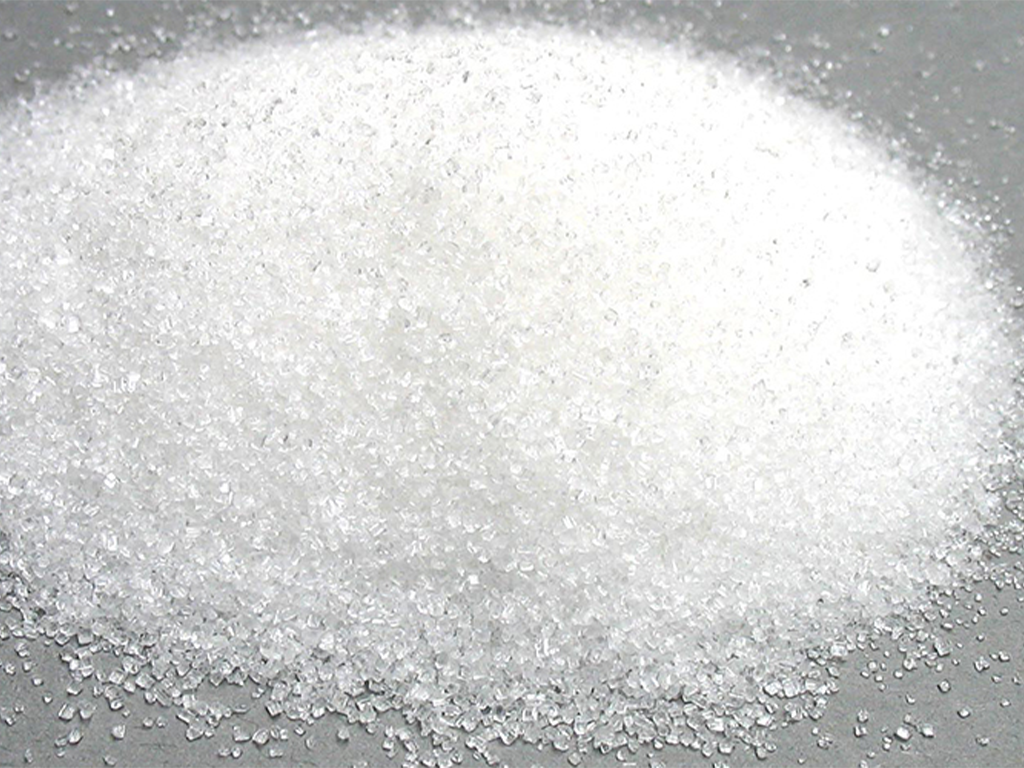
The term carbohydrate or saccharide is a collective name for all substances with the chemical formula Cn(H2O)n. Carbohydrates are the basis of nutrition. They are part of our diet as starch, glucose (grape sugar), fructose (fruit sugar), lactose (milk sugar) and saccharose (beet, cane or table sugar). Important suppliers of carbohydrates are potatoes and cereals such as rice, wheat, maize, millet, rye and oats. The various carbohydrates in our foods are introduced to the pupils. The characteristics of polysaccharides, disaccharides and monosaccharides are explained to them and in which foods these substances occur and how they are structured. In addition, the different origins of starch, starch degradation products, gelling agents as well as sugar alcohols in confectionery are dealt with. The DVD shows how various substances can be detected with the help of chemical processes. Together with the extensive accompanying material the DVD is ideally suited for use in the classroom.