







 Economy

46500906 / 55500662
Monetary System
Currency, Foreign Exchange and Central Bank
For many hundreds of years, means of payment have been used for the exchange of goods. Initially, shells, silver or gold were offered as payment. Today money still fulfils the same purpose, but its form and complexity have changed profoundly. Original soundtrack Prof. Dr. Timo Wollmershäuser, ifo Institute: “The most important function of money is that of a means of payment. Money usually consists of banknotes, coins or maybe money in our bank accounts. Basically, we use money every day to buy things. It’s our means of payment, so we can purchase goods and services in a supermarket or in stores with it.” With money, a distinction is made between money in the bank, the so-called credit money, or cash. Cash is still very popular with people. Original soundtrack Dr. Jens Weidmann, President of the German Central Bank: “It is a simple and safe means of payment, and many people appreciate it because they don’t need technology for it and they don’t have to disclose any personal information.” There are over 160 cash currencies around the world. The currency zone defines the area of validity of the respective coins and notes. Original soundtrack Prof. Dr. Timo Wollmershäuser, ifo Institute: “This is regulated, for instance, with the Bundesbank Act in Germany. It includes a section according to which the euro is the legal tender in Germany. I think there is a similar regulation in every country of the world. They all have laws determining what currency, what means of payment has to be accepted by shops for purchases.”
Play trailer
Curriculum-centred and oriented towards educational standards
Matching
Podcasting
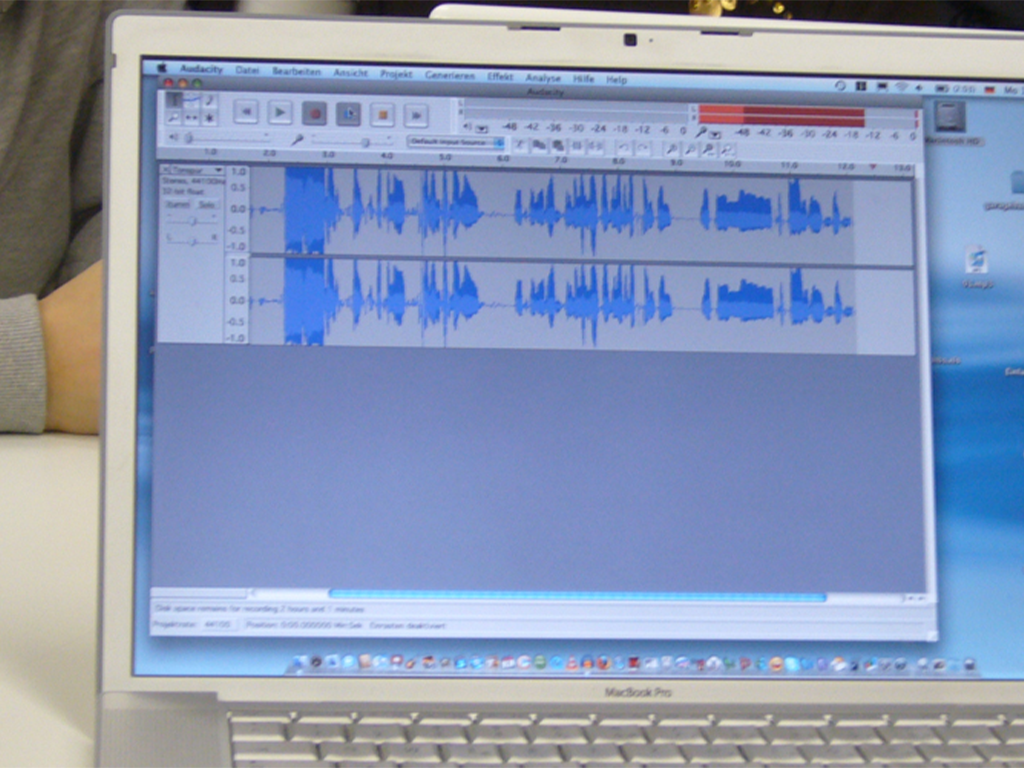
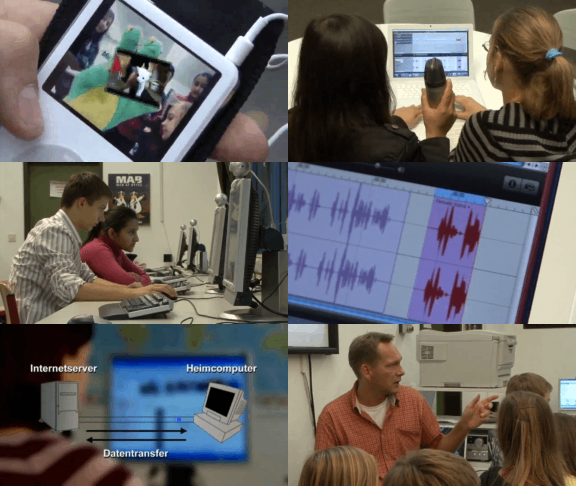
Today, the use of new media has become a matter of course not only in everyday life – schools and teaching, too, benefit from the new technologies and methods, which support active and independent learning. Especially in computer science, ethics and language courses but also in all other subjects, modern media are a valuable pedagogic and didactic asset. This DVD uses the example of podcasts to demonstrate how the possibilities opened up by new media can be applied in the classroom and how the pupils can be taught to handle them in a competent and target-oriented manner. The film is aimed at supporting the use of podcasts at school and encourages making them. This also requires the ability to find information on the Internet and assess it. The film informs on the functionality of podcasts and technical background as well as on the teaching and learning possibilities offered by podcasts – ranging from specific contents to superordinate learning targets such as the advancement of creativity and team spirit. The DVD is a useful support for teachers applying new media and wishing to show their pupils how to handle Running Time: 20:29 ms them in a sensible way.
Ideals of Beauty
1. What Is Beautiful?
Seal of approval
Quality seals such as the "Bio-Siegel", "Blauer Engel", "Stiftung Warentest" and up to 1,000 other seals represent characteristics such as sustainability, health or safety with regard to a product, a service or even a company.