







 Society
4673639 / 5562329
Diskriminierung von Minderheiten
Wie reagieren wir?
"Zeit für Helden – Und was machst Du?" schafft Aufklärung rund um die Themen Diskriminierung, Rassismus, Vorurteile und Zivilcourage. Die vierteilige DVD-Reihe geht der Frage auf den Grund, wie Menschen handeln, wenn vor ihren Augen ein offensichtliches Unrecht geschieht. Wie viel Zivilcourage haben unsere Mitmenschen? Greifen sie ein, schauen sie weg oder suchen sie gar gleichgültig das Weite? Passanten geraten in von Schauspielern gestellte Situationen, die eine ordentliche Portion Zivilcourage erfordern. Mit versteckten Kameras werden die Helden unserer Zeit gesucht. In dieser DVD enthalten: Was passiert, wenn ein Rassist in der Öffentlichkeit seinen schwarzen Schwiegersohn als Sklave bezeichnet, ein Übergewichtiger keinen Burger essen darf, Feindlichkeit gegenüber Minderheiten zum Ausdruck gebracht wird oder ein Homosexueller bei seinem Outing gedemütigt wird?
Play trailerCurriculum-centred and oriented towards educational standards
Matching


Soziale Medien
Ein neuartiges Phänomen ist in den sozialen Netzwerken zu beobachten – das demonstrative Zurschaustellen des Reichtums der Eltern.


Wegwerfgesellschaft
Der Müllberg wächst Jahr für Jahr. Das liegt zum Einen daran, dass die Verpackungen aufwändiger werden, zum Anderen an den extrem kostengünstig produzierten Konsumgütern, die häufig einen Neukauf lohnender als eine Reparatur machen.

Gleichstellung der Geschlechter
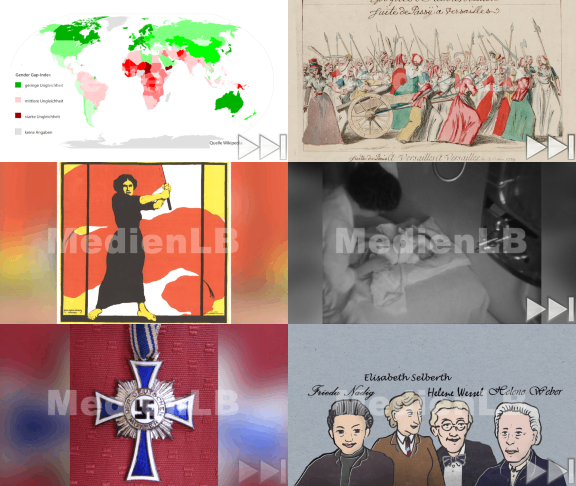
„Männer und Frauen sind gleichberechtigt.“, so steht es im deutschen Grundgesetz in Artikel 3. Doch leben wir tatsächlich in einer geschlechtergerechten Gesellschaft? Wie hängen die Begriffe Gleichbehandlung, Gleichberechtigung und Gleichstellung zusammen? Wie kann die Gleichstellung der Geschlechter erreicht werden?