







 Biology

46500901 / 55500658
Conditioning
Pavlovian Dog and Skinner-box
The theory of classical conditioning is one of several learning theories which explains how behaviours can result from stimulation without, however, taking into consideration the processes in the brain (black box). Stimuli differ considerably. They can be, for example, chemical, mechanical, acoustic or temperature stimuli. The stimulus makes contact with a sensory organ, this leads to excitation formation. The excitation is transferred to the brain via sensory nerves and processed there. The command from the brain is passed on via motor nerves. The command is executed and a response occurs.
Play trailer
Curriculum-centred and oriented towards educational standards
Matching


The Daily Newspaper
Every day, there is a surge of news reaching us via different news channels. In spite of TV and Internet, the daily paper still is one of the most important main sources of news. But how is a newspaper created? The film shows the production of a paper in the course of one day. Starting with the editorial meeting in the morning, in which the topics and deadlines are determined, the film accompanies a journalist during her research work. You can see how a journalistic interview is conducted and what the photographer must consider when taking a press photo. Back in the editorial office, the editor’s work is illustrated, which includes the page layout and the writing of an online article in today’s time. Impressive pictures from the printing centre depict the process from the digital page to the finished newspaper. Together with the comprehensive accompanying material, the DVD is perfectly suited for use at school

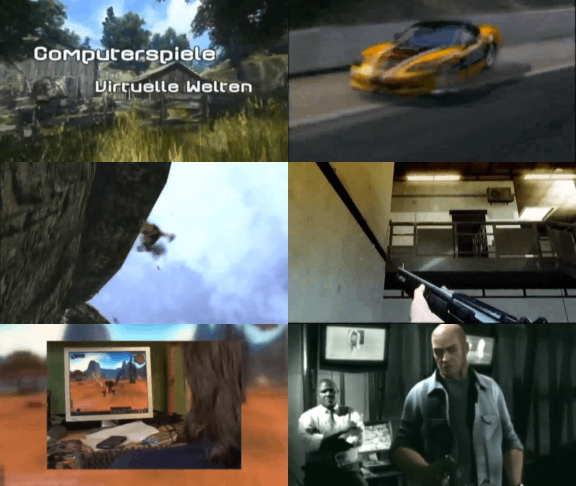
Computer Games
This film covers the topic of computer games in a variety of ways and from many different angles. Apart from the fascina- tion of computer games for users, the historical development as well as the production of computer games are described. The established genres are introduced, the guidelines of the German BPjM are explained. In light of recent public discussions, a neutral overview of the pros and cons of playing computer games is given, and different kinds of player behaviour are outlined. In this film, the pupils will recognise many aspects of their favourite pastime that encourage an independent, constructive use of this medium and reinforce their media competency. The film and teaching material are very closely related to the real-life situation.
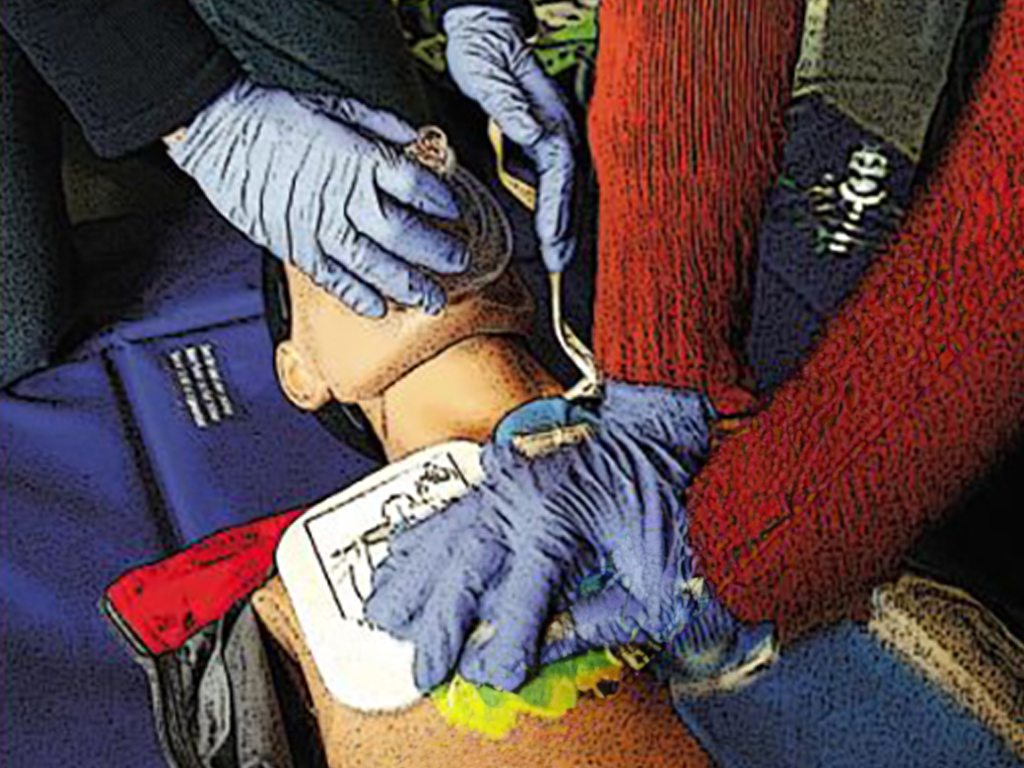

Resuscitation
It can happen to anyone – of any age, in any place, at any time. Sudden cardiac arrest may quickly prove fatal. Immediate action is called for! Just remember: Check Call Press Anyone can do it. You can't do anything wrong!