







 Geography
4656542 / 5551305
Capitals of Northern Europe
Helsinki, Copenhagen, Oslo, Reykjavik, Stockholm
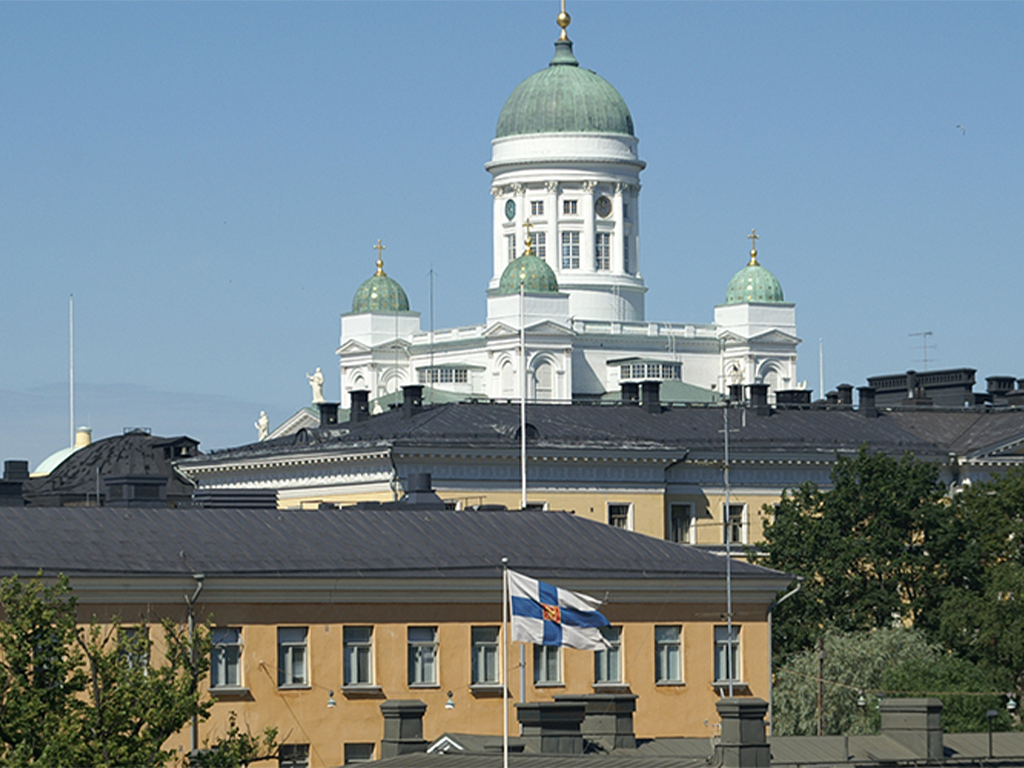
This DVD presents the five capitals of Northern Europe: Helsinki, Copenhagen, Oslo, Reykjavik and Stockholm. The pupils learn about the topographic situation of the capitals in Europe and in their respective country. The history of the cities and their development are outlined, as well as their particularities. This encompasses imposing buildings, famous sights, historical monuments, architectural characteristics and also the cultural life. The pupils are informed on the economic relevance of the capitals within the respective country as well as about their infrastructure and traffic and transport connec- tions to other countries. Impressive pictures capture the uniqueness of each one of the capitals and illustrate their characters. The facts of the film are complemented by extensive accompanying materi- al, which deepens the pupil’s understanding. Here, not only those aspects of the cities already mentioned are discussed but also the topographic, climatic and political mapping of their respective countries (Finland, Denmark, Norway, Iceland and Sweden). The pupils learn to assign the capitals to their respective countries and to characterise them as well as to compare and assess them.
Play trailer
Curriculum-centred and oriented towards educational standards
Matching
Ideals of Beauty
1. What Is Beautiful?


Mobile Learning II
Oh, what’s that? Original soundtrack Thissen: “As our children grow up in a media world and naturally handle the media, they should also be a topic in school.“ An older child says the point is that they don’t just load down apps but create things themselves that haven’t existed so far. Hi, I’m Jana. A propeller hat. I’ll put it on. Now I’m no longer a simple rhino, but a flying rhino. Original soundtrack Thissen: “It’s exactly the great flexibility of tablets that promotes very personalised and adapted learning.” Original soundtrack Welzel: “It’s fascinating to see how the children grow with their products and how they always want to improve them.” The Westminster Abbey is a church in London for the royal family. Original soundtrack Welzel: “And?“ They think it is ok.

Blogging
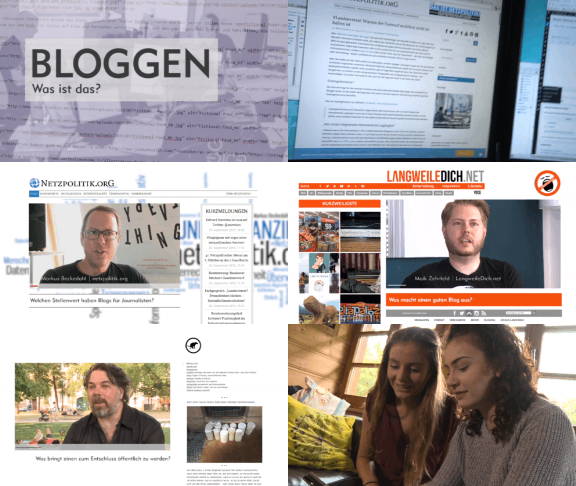
The weblog or blog, for short, as a medium is not much older than this century. Blogs came into being in the World Wide Web as ’messages from below’, as web pages from web creators who wanted to share their view of the world with the world. They are short notes, long texts, pictures, videos, which are posted loosely and at random intervals to the world for an undefined public.