







55503281
Kohlenhydrate: zuckersüße Chemie
In 10 interaktiven H5P-Modulen wird Wissen zum Thema Kohlenhydrate vermittelt und anschließend abgefragt.
Das Medium bietet H5P-Aufgaben an, die ohne zusätzliche Software verwendbar sind.
Durch interaktive Aufgabentypen wird das audiovisuelle und interaktive Lernen einfach.
Lernen macht jetzt Spaß!
Included Tasks
- I Nahrungsgrundlage: Kohlenhydrate - Aufgaben mit Video
- II Energiekreislauf - interaktive Aufgabe
- III Zucker ist nicht gleich ZUCKER - interaktive Aufgabe
- IV Aufbau der Kohlenhydrate - Lückentext
- V Fehling-Probe - interaktives Video
- VI Einteilung der Kohlenhydrate - interaktive Aufgabe
- VII Einfachzucker: Monosaccharide - interaktive Aufgabe
- VIII Zweifachzucker: Disaccharide - interaktive Aufgabe
- IX Stärkenachweis - Video mit Aufgaben
- X Kohlenhydrate-Quiz - interaktive Aufgabe
Curriculum-centred and oriented towards educational standards
Matching

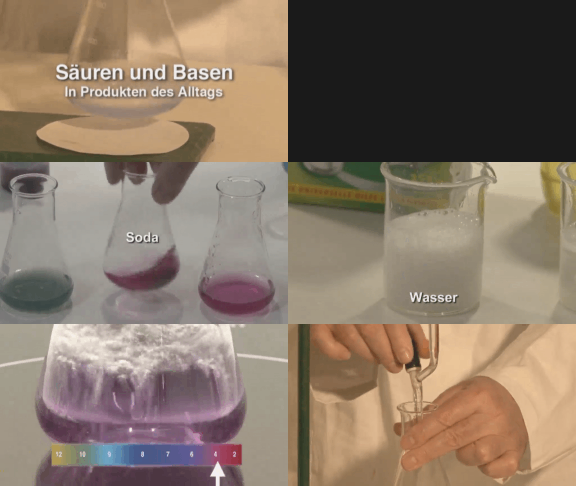
Acids and Bases
We can find acids and bases in every supermarket, some of them in our food, others in cleaning agents. In everyday products, acids and bases as well as acidic and alkaline reacting salts have extremely different functions. In food, acids are either present or added as flavouring agents such as citric acid, tartaric acid and acetic acid, as antioxidants such as ascorbic acid or generally as acidifiers, sequestrants (citric acid and tartaric acid) and preservatives (acetic acid).


World of Crystals
What have salt, iron, diamonds and a snow flake in common? At first glance, not very much.

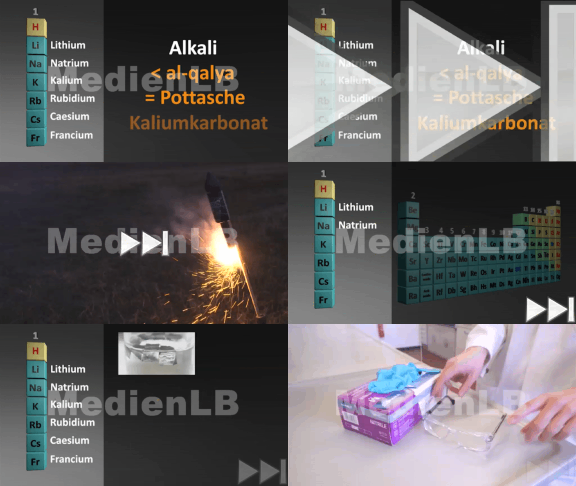
Alkali Metals
What do lithium batteries, table salt and firework rockets have in common?