







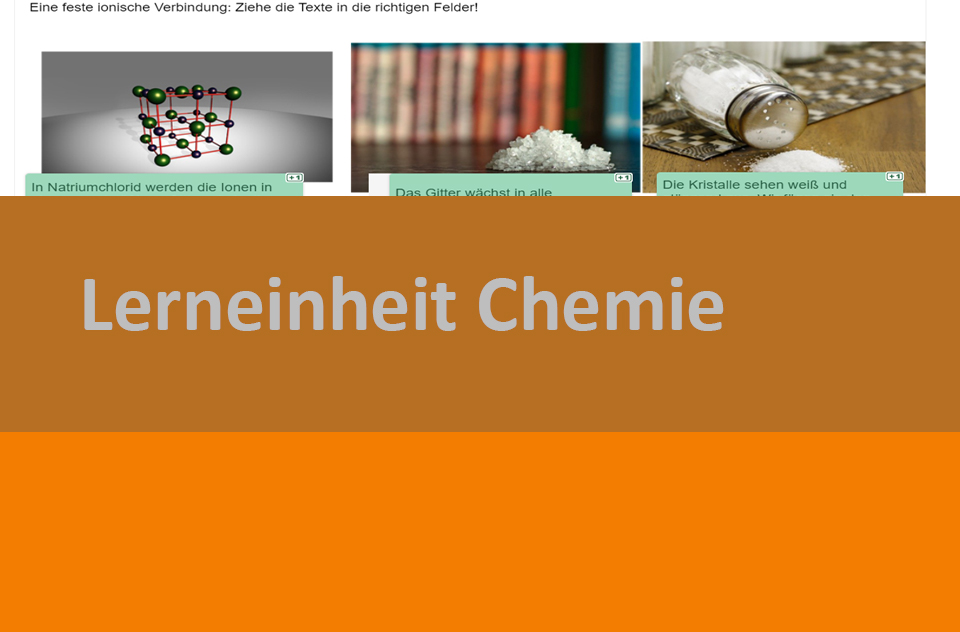
55502616
Vergleich von ionischen und kovalenten Verbindungen
In 11 interaktiven Aufgaben wird Wissen zu ionischen und kovalenten Verbindungen vermittelt und anschließend abgefragt.
Das Medium bietet H5P-Aufgaben an, die ohne zusätzliche Software verwendbar sind.
Durch interaktive Aufgabentypen wird das audiovisuelle und interaktive Lernen einfach.
Lernen macht jetzt Spaß!
Included Tasks
- I Ionische und kovalente Verbindungen - Lückentext
- II Eine feste ionische Verbindung - Interaktive Aufgaben
- III Eine feste molekulare kovalente Verbindung - Interaktive Aufgaben
- IV Eigenschaften - Gitterstruktur - Interaktive Aufgaben
- V Die Eigenschaften von ionischen Verbindungen - Interaktive Aufgaben
- VI Die Eigenschaften von kovalenten Verbindungen - Interaktive Aufgaben
- VII Eine Verbindung-Quiz - Interaktive Aufgaben
- VIII Kovalent oder ionisch? - Interaktive Aufgabe
- IX Löslichkeit in organischen Lösungsmitteln - Interaktive Aufgaben
- X Warum leiten feste ionische Verbindungen keinen Strom - Interaktive Aufgaben
- XI Kovalente Moleküle - Interaktive Aufgaben
Curriculum-centred and oriented towards educational standards
Matching
Elemente im PSE
In unserem Arbeitsheft Chemie 6-8, Vol. 1 – Elemente im PSE finden Sie 50 interaktive und didaktisch aufbereitete Aufgaben.
Lerneinheit Chemie 8 – Kalk
In unserem Arbeitsheft „Lerneinheit Chemie 8 – Kalk“ finden Sie 10 interaktive und didaktisch aufbereitete Aufgaben zum Thema Kalk.
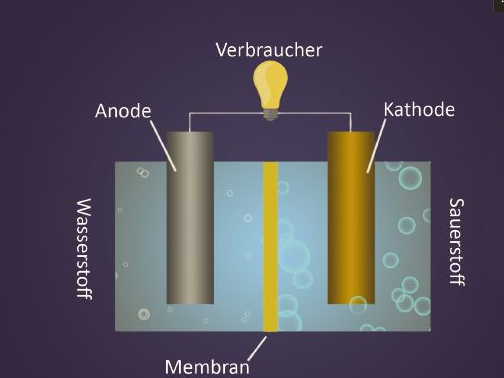

Fuel Cell
A smartphone offers a lot of opportunities nowadays. The numerous apps and applications may enrich your daily life but cost a lot of electricity. It is particularly annoying when the device fails at the most inconvenient moments. Conventional rechargeable batteries are often empty after one day already, and the device needs to be plugged in. Besides many others, also this problem could be solved by using fuel cells – thus considerably increasing the duration of the smartphone.