







55502519
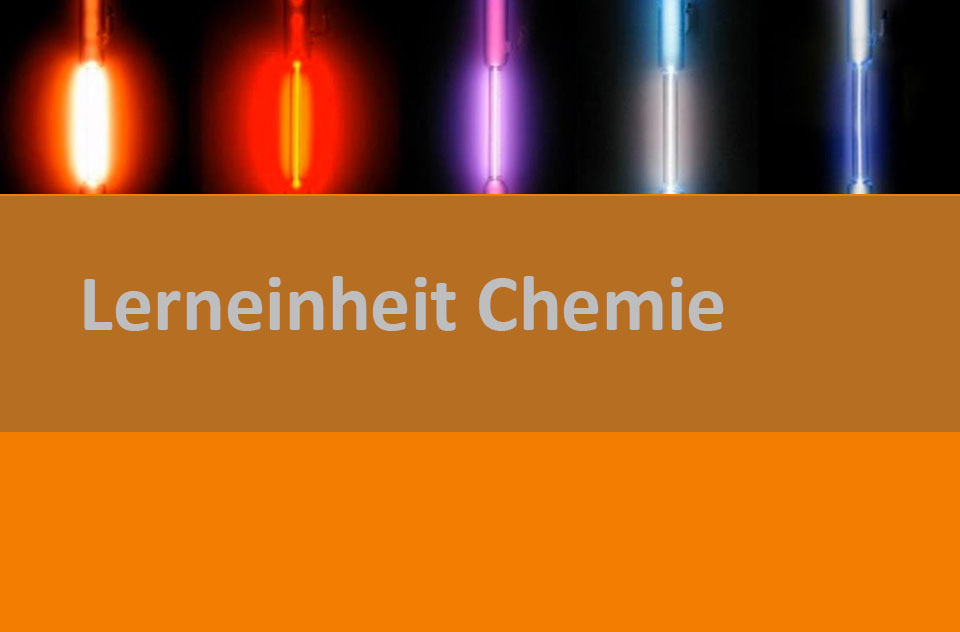
Edelgase
In 10 interaktiven Aufgaben und Videos wird Wissen zum Thema Edelgase vermittelt und anschließend abgefragt.
Das Medium bietet H5P-Aufgaben an, die ohne zusätzliche Software verwendbar sind.
Durch interaktive Aufgabentypen wird das audiovisuelle und interaktive Lernen einfach.
Lernen macht jetzt Spaß!
Included Tasks
- I Chemie der Edelgase - Lückentext
- II Wortgitter Edelgase - interaktive Aufgabe
- III Vorkommen und Gewinnung von Edelgasen - Video mit Aufgaben
- IV Edelgas:Anwendungen - interaktive Aufgabe
- V Atomkern; Elektronen; Schalen - interaktive Aufgabe
- VI Edelgase leuchten - interaktive Aufgabe
- VII Schalenmodelle zuordnen - interaktive Aufgabe
- VIII Edelgasregel - interaktive Aufgaben
- IX Elektronenverteilung - interaktive Aufgabe
- X Edelgase - Interaktive Aufgaben
Curriculum-centred and oriented towards educational standards
Matching
Redoxreaktionen
In unserem Arbeitsheft Chemie 7, Vol. 1 – Redoxreaktionen finden Sie 50 interaktive und didaktisch aufbereitete Aufgaben.

Acids and Bases
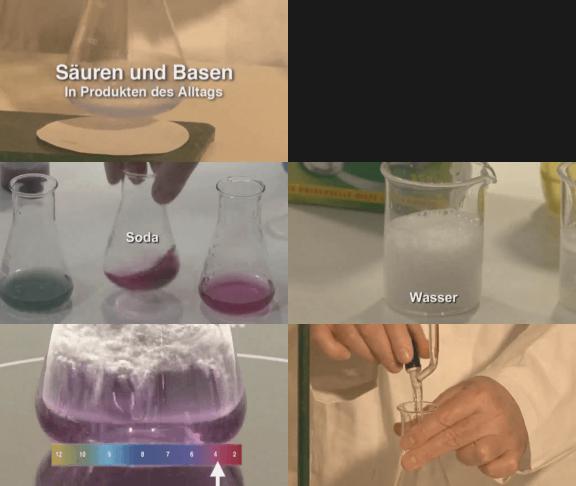
We can find acids and bases in every supermarket, some of them in our food, others in cleaning agents. In everyday products, acids and bases as well as acidic and alkaline reacting salts have extremely different functions. In food, acids are either present or added as flavouring agents such as citric acid, tartaric acid and acetic acid, as antioxidants such as ascorbic acid or generally as acidifiers, sequestrants (citric acid and tartaric acid) and preservatives (acetic acid).
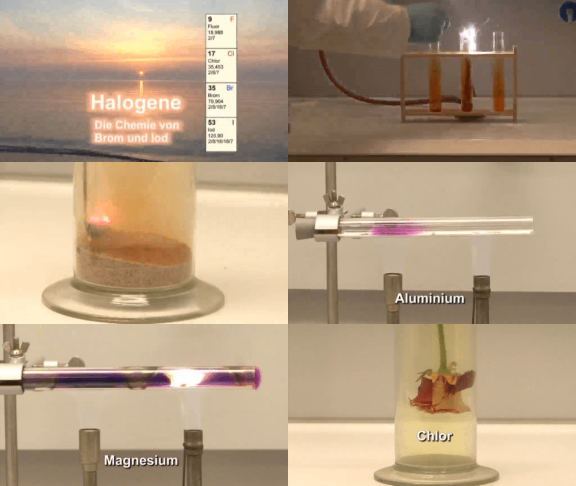
Halogens
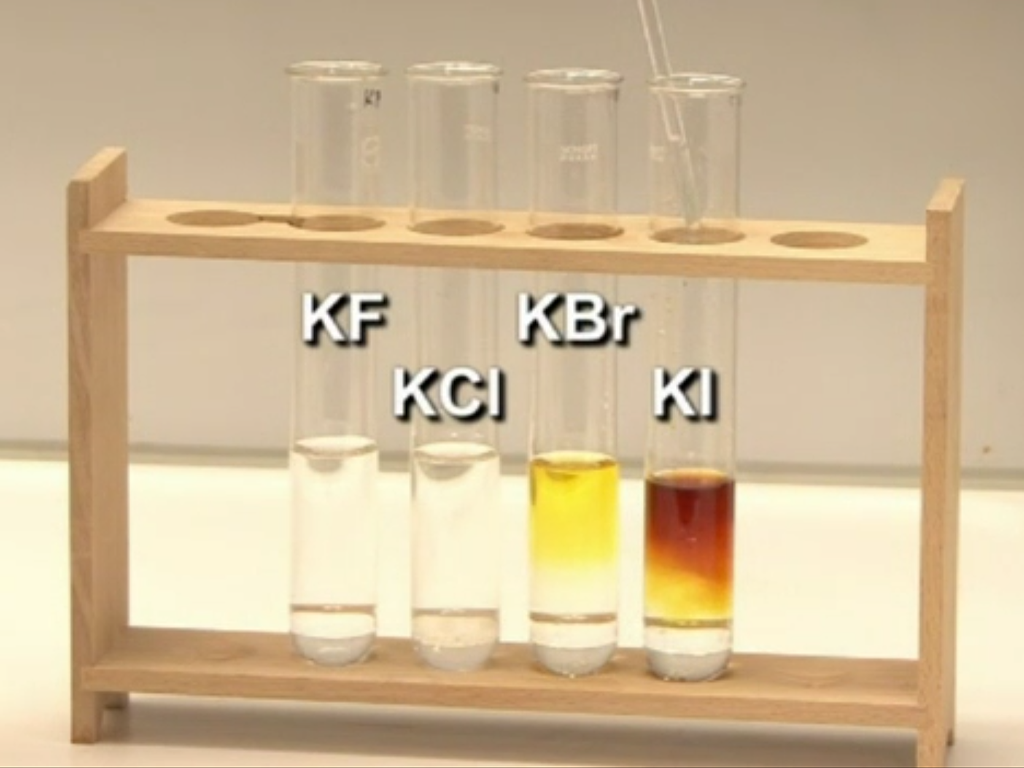
The compounds of halogens are - with the exception of astatine - widespread, can be encountered in nature and are versatile substances. This fact is taken up on this DVD in order to teach the students the chemistry of the halogens by illustrating their special qualities and explaining the correlation of their structure with their chemical properties. In the first part, an overview of the element group of halogens lays emphasis on the common as well as on the distinguishing characteristics of fluorine, chlorine, bromine and iodine. In a second part, the specific properties of bromine and iodine are presented. This topic is linked to the students‘ everyday experience on the one hand (bromine as a catalyst for reactolite sunglasses, iodine as an agent in medicine, etc.) on the one hand. As a rule, they are of a kind that can only be realized with difficulty, or high expenditure in the chemistry classroom. With the help of these experiments, students are introduced to the chemistry of the halogens in a way that enables them to draw conclusions on the basis of their observations.