







 Mathematics

4656540 / 5551303
Units of Length
Measuring and Calculating
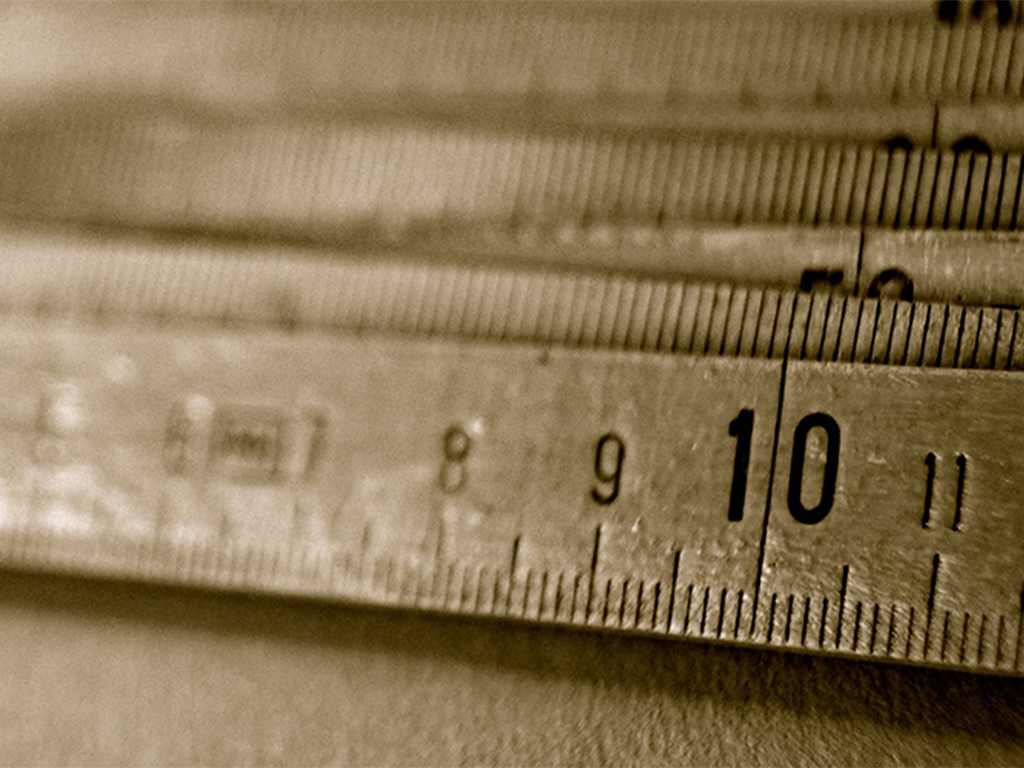
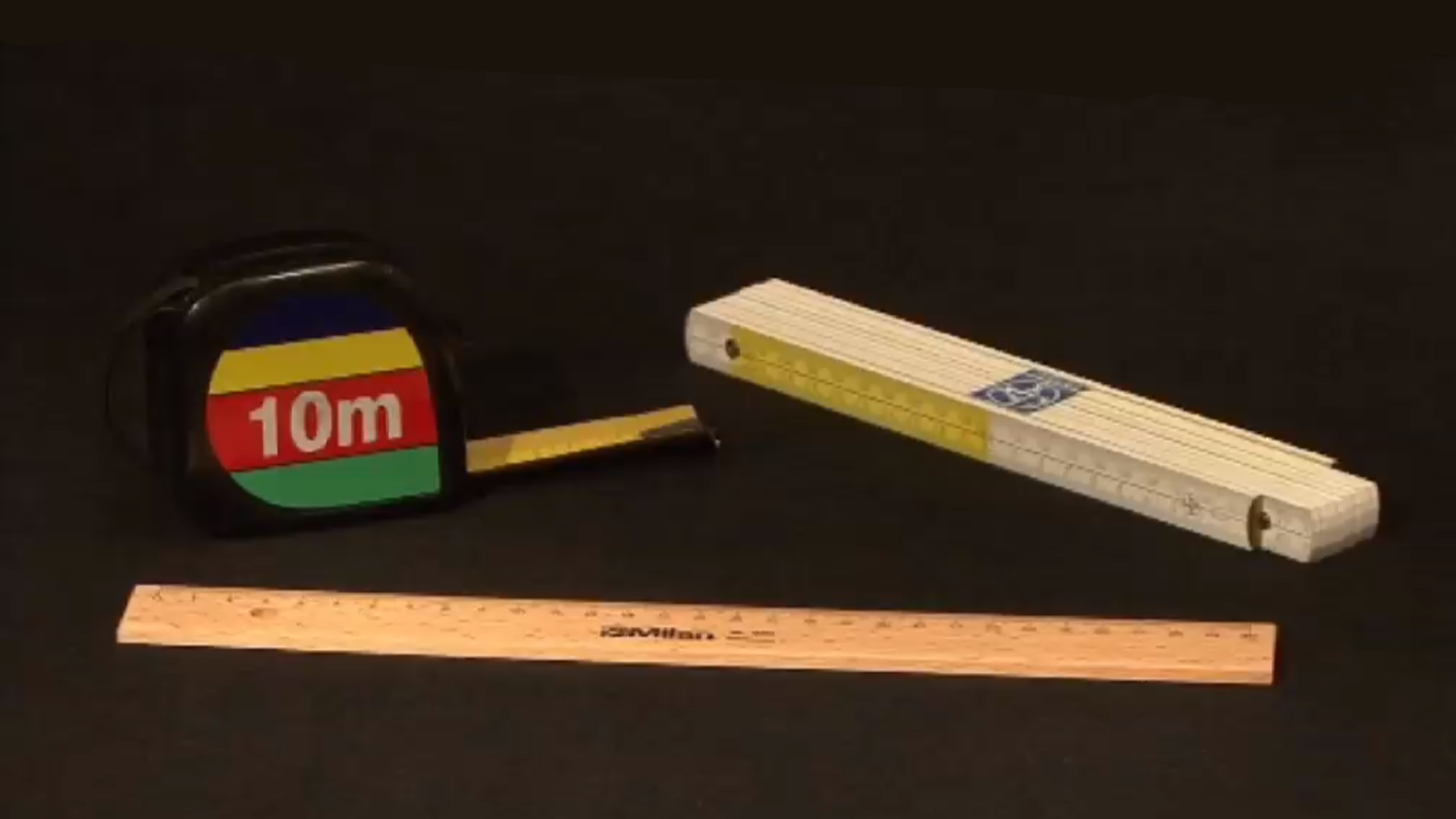
The DVD starts with a look back into the past. How did peop- le measure in former times? What historical units of measure- ment were there? What is the standard metre? Since when has there been a system of units? Subsequently, the units of measurement – metre (m), centimetre (cm), milllimetre (mm), decimetre (dm) and kilo- metre (km) – are examined more closely. In a third chapter, an overview of the conversions is presented and their systematics explained. Decimal points and the prefixes are clearly illustrated. Then the DVD offers a digression visiting other countries and their length units. America and Great Britain, with inches, feet, yards and miles, play a central role. In the fifth chapter, calculations using scales are presented. Here the focus is laid on scales in maps, but also scaling down and up are dealt with. In the last chapter, circumferences of rectangles and squares are measured and calculated with various examples.
Play trailer
- <> Languages: DE, EN, TR
- <> Target Groups: GRU
- <> Subject: Mathematics
- <> Length: 28:32 min
- View in learning platform
Licenses
Curriculum-centred and oriented towards educational standards
Matching
Copyright
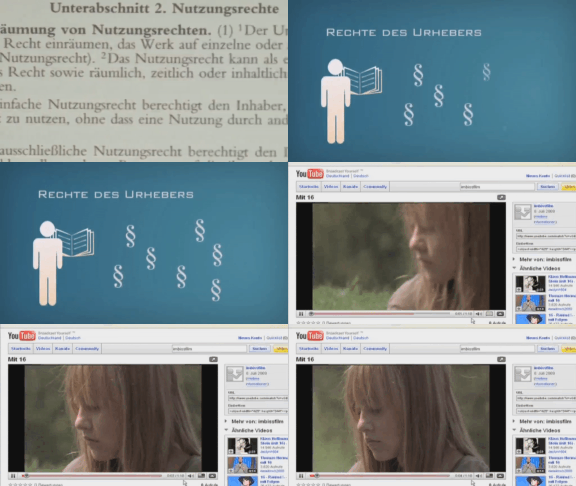
Copyright is subject to constant change to keep up with technological advances. This film enables the viewer to grasp the basic principles of this extremely intricate matter. By way of introduction, the film defines what an author is, what kinds of works there are and how long a work is protected on principle. Then the fundamental rights of an author are cited and it is shown how these are exploited in our times. In the third chapter, the respective rights are illustrated by way of practice-oriented examples of books, photos, music and films. Here, of course, an emphasis is laid on the field of education, taking into account the latest case law within the EU and Austria in particular. A further chapter highlights the problems arising with the Internet and goes into the citation law and pirate copies. All in all, in this way the viewer is made familiar with the most important basic terms and their meanings. Comprehensive worksheets and additional accompanying material invite us to deepen our knowledge of the subject.
Podcasting
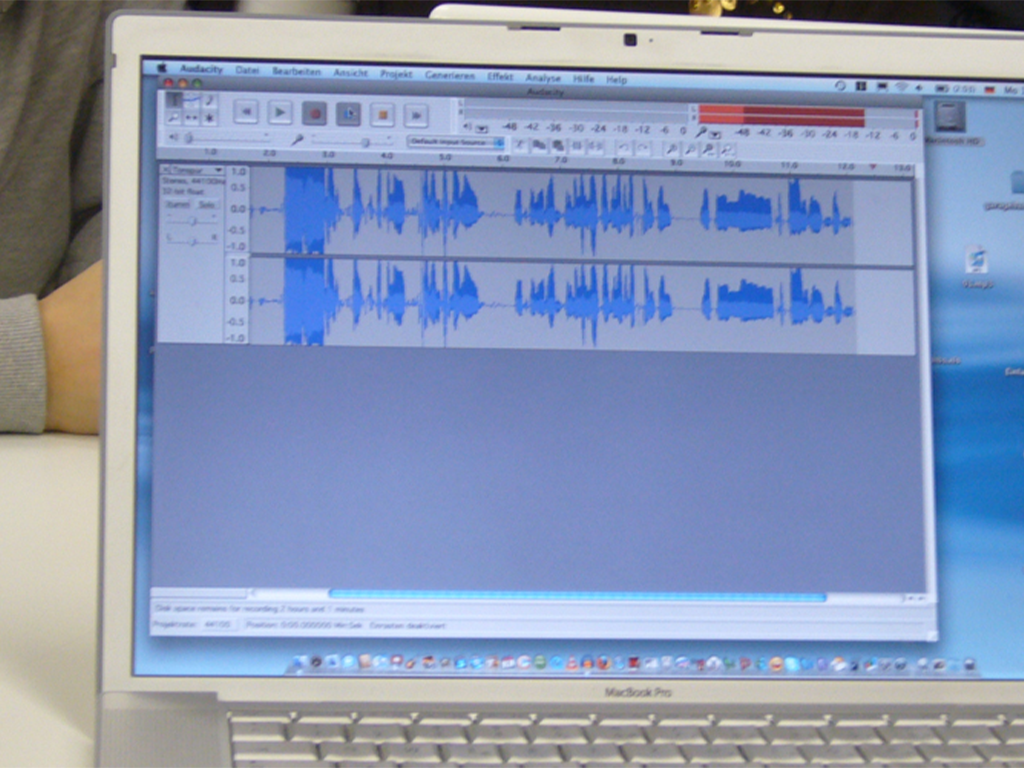
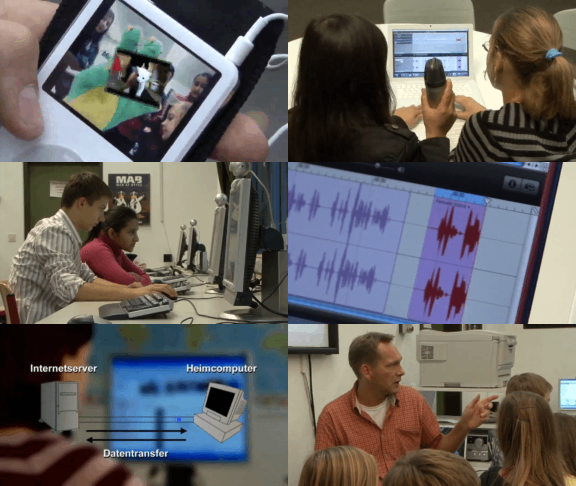
Today, the use of new media has become a matter of course not only in everyday life – schools and teaching, too, benefit from the new technologies and methods, which support active and independent learning. Especially in computer science, ethics and language courses but also in all other subjects, modern media are a valuable pedagogic and didactic asset. This DVD uses the example of podcasts to demonstrate how the possibilities opened up by new media can be applied in the classroom and how the pupils can be taught to handle them in a competent and target-oriented manner. The film is aimed at supporting the use of podcasts at school and encourages making them. This also requires the ability to find information on the Internet and assess it. The film informs on the functionality of podcasts and technical background as well as on the teaching and learning possibilities offered by podcasts – ranging from specific contents to superordinate learning targets such as the advancement of creativity and team spirit. The DVD is a useful support for teachers applying new media and wishing to show their pupils how to handle Running Time: 20:29 ms them in a sensible way.
Youth Movement
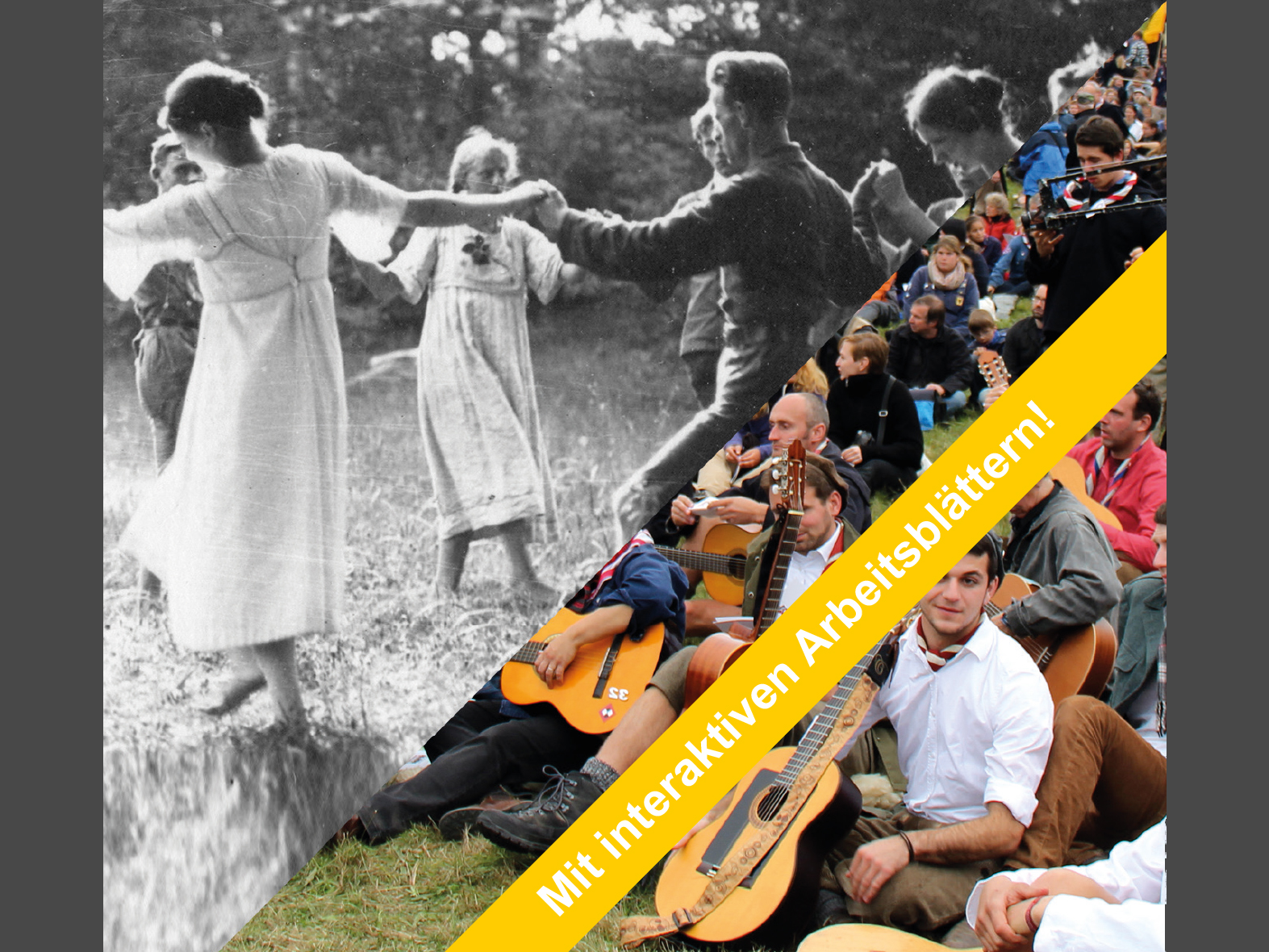
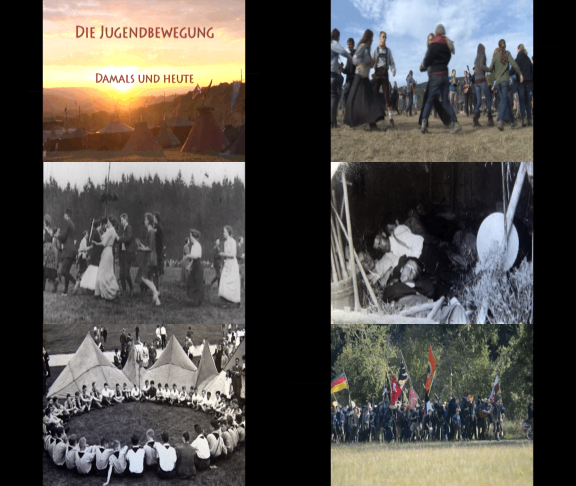
Dancing until your feet hurt: Here, at the meeting on the Hoher Meissner near Kassel, 3,500 participants from Boy Scout associations, youth and Wandervogel groups from all over the German-speaking region have gathered. They want to celebrate, simply get to know each other and commemorate a historic anniversary.