







 Primary School

4671651 / 5561475
Clothing
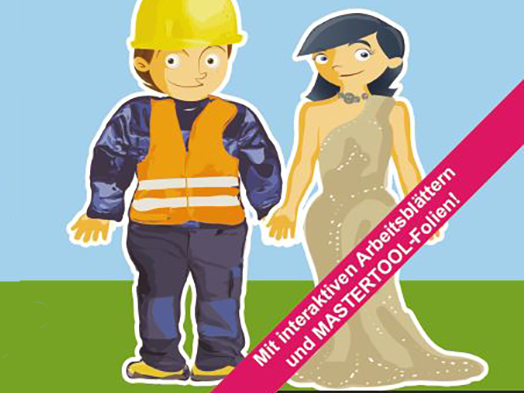
"Clothes Make the Man"
Besides food and shelter, clothing is also one of the basic needs of human beings. Suitable clothing protects against wet, cold or warm conditions, and it also protects us from injuries or burns from the sun. Clothes are also useful because they help us to be able to pursue some jobs or tasks in a better way when wearing them. And finally, the clothes we wear are a sign we set for others. Thus, it is an expression of our personality. We sometimes let clothes speak for us, so to speak. Who we are, how we feel and what group we belong to. Which items does clothing comprise? Firstly, there is underwear: underpants and undershirt. On our feet, we wear socks or stockings. When it is cold, we might wear tights. Over our underwear, we wear a shirt or T-shirt on the upper part of our body. Our legs are covered by trousers. The trousers are supported by a belt or braces.
Play trailer
- <> Languages: DE, EN, TR
- <> Target Groups: GS
- <> Subject: Primary School
- <> Length: 26:37 min
- View in learning platform
Licenses

Curriculum-centred and oriented towards educational standards
Matching
Inclusion
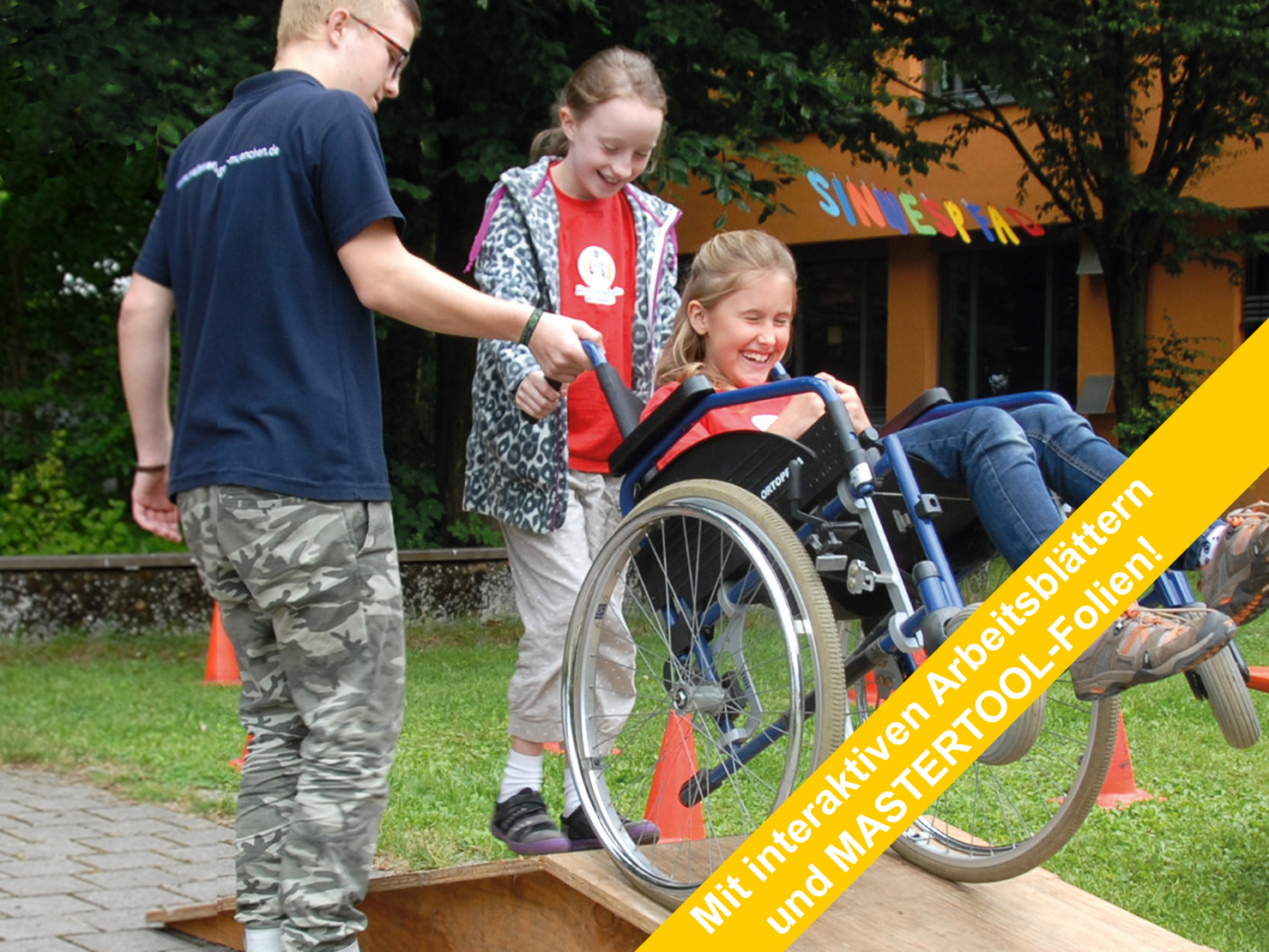
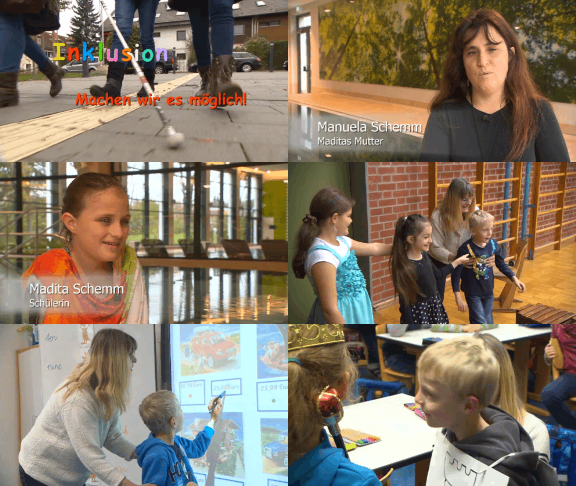
Madita is eleven and blind. She does not want to go to a special school but to a regular grammar school. She says she feels "normal" there. Jonathan is eight and has a walking disability. He likes going to the school where he lives. Here, his best friend sits next to him. Max Dimpflmeier, a teacher who is severely deaf, explains that school life is not easy. Quote Max Dimpflmeier: "You don't want to attract attention, you want to avoid saying that it is necessary for you that 70 people adjust to your situation." People on their way to inclusion.
Podcasting
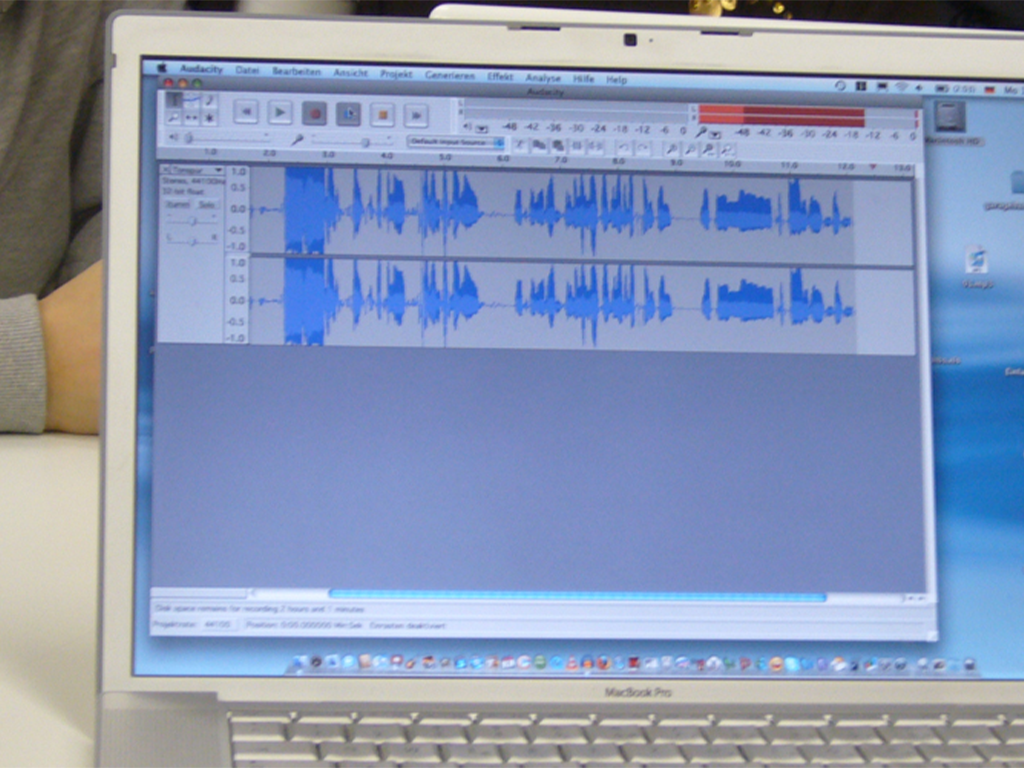
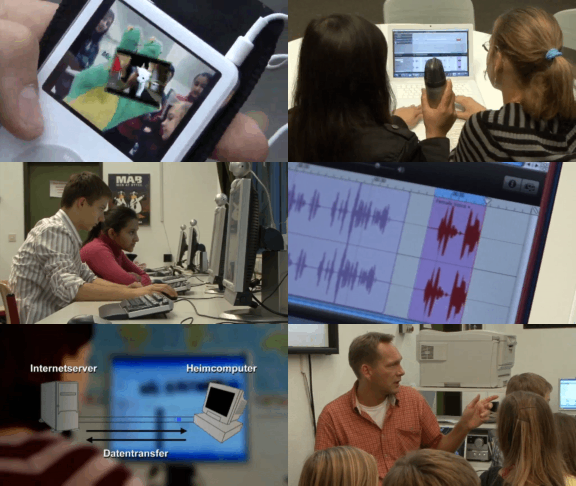
Today, the use of new media has become a matter of course not only in everyday life – schools and teaching, too, benefit from the new technologies and methods, which support active and independent learning. Especially in computer science, ethics and language courses but also in all other subjects, modern media are a valuable pedagogic and didactic asset. This DVD uses the example of podcasts to demonstrate how the possibilities opened up by new media can be applied in the classroom and how the pupils can be taught to handle them in a competent and target-oriented manner. The film is aimed at supporting the use of podcasts at school and encourages making them. This also requires the ability to find information on the Internet and assess it. The film informs on the functionality of podcasts and technical background as well as on the teaching and learning possibilities offered by podcasts – ranging from specific contents to superordinate learning targets such as the advancement of creativity and team spirit. The DVD is a useful support for teachers applying new media and wishing to show their pupils how to handle Running Time: 20:29 ms them in a sensible way.
Air Traffic
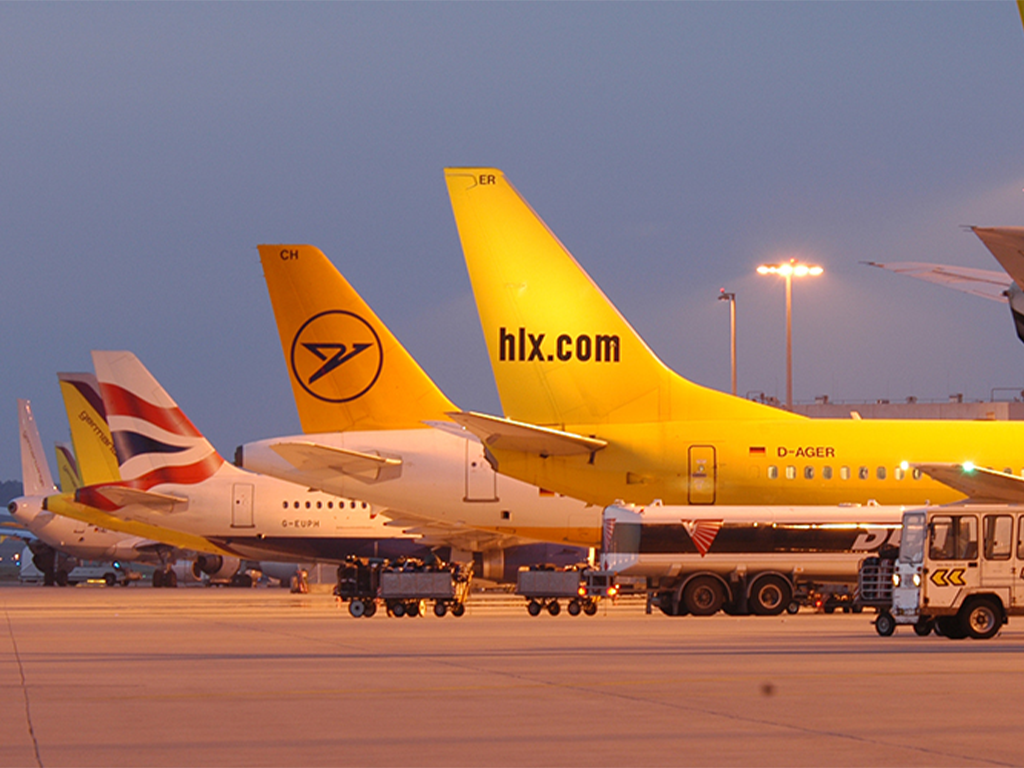
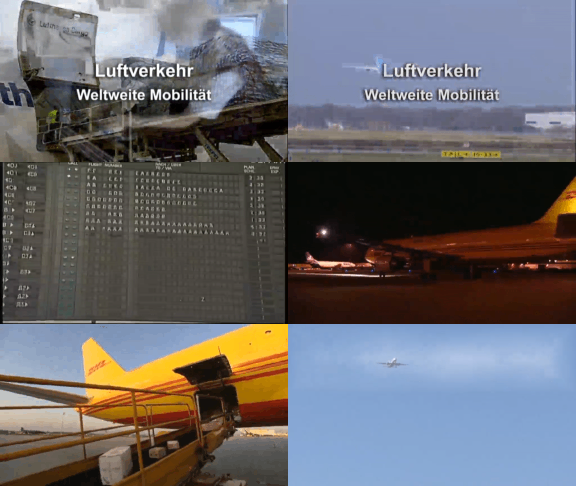
Being able to fly has been a dream of humanity from time immemorial. But it does not even date back a century that people actually started being able to travel through the air. Since the 1960s, the number of flight passengers has been constantly increasing. Thus, the airspace is no longer dominated by birds but by man-made flying objects.