







 Primary School

46500908 / 55500664
Recycling
separating, sorting, reusing
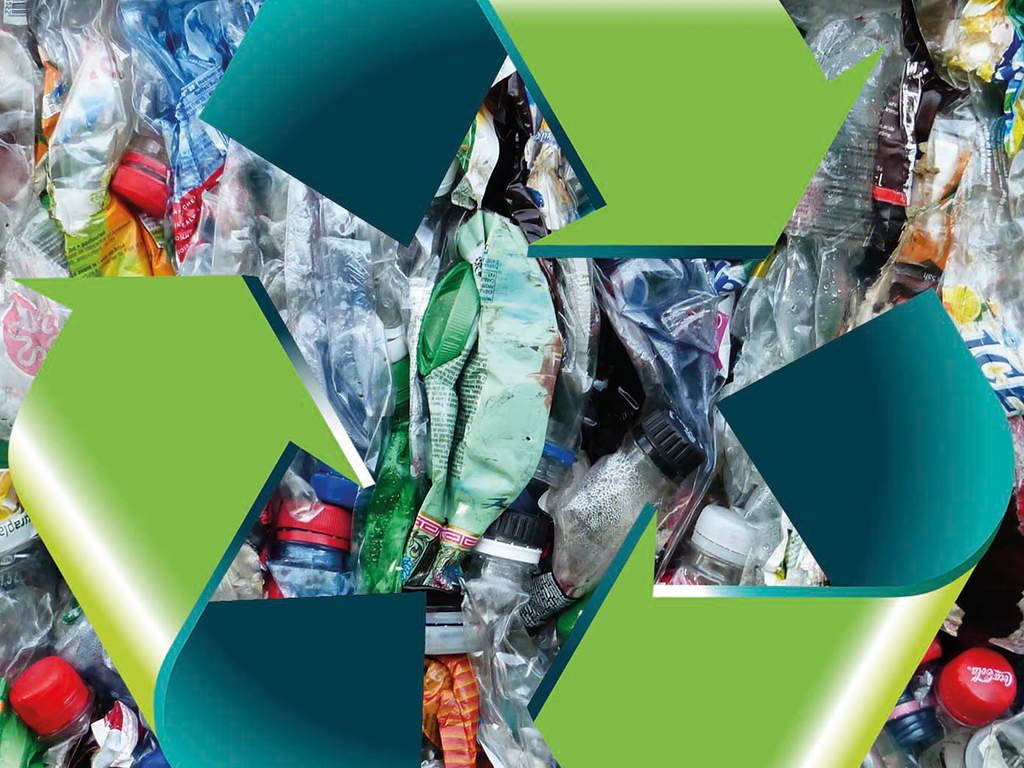
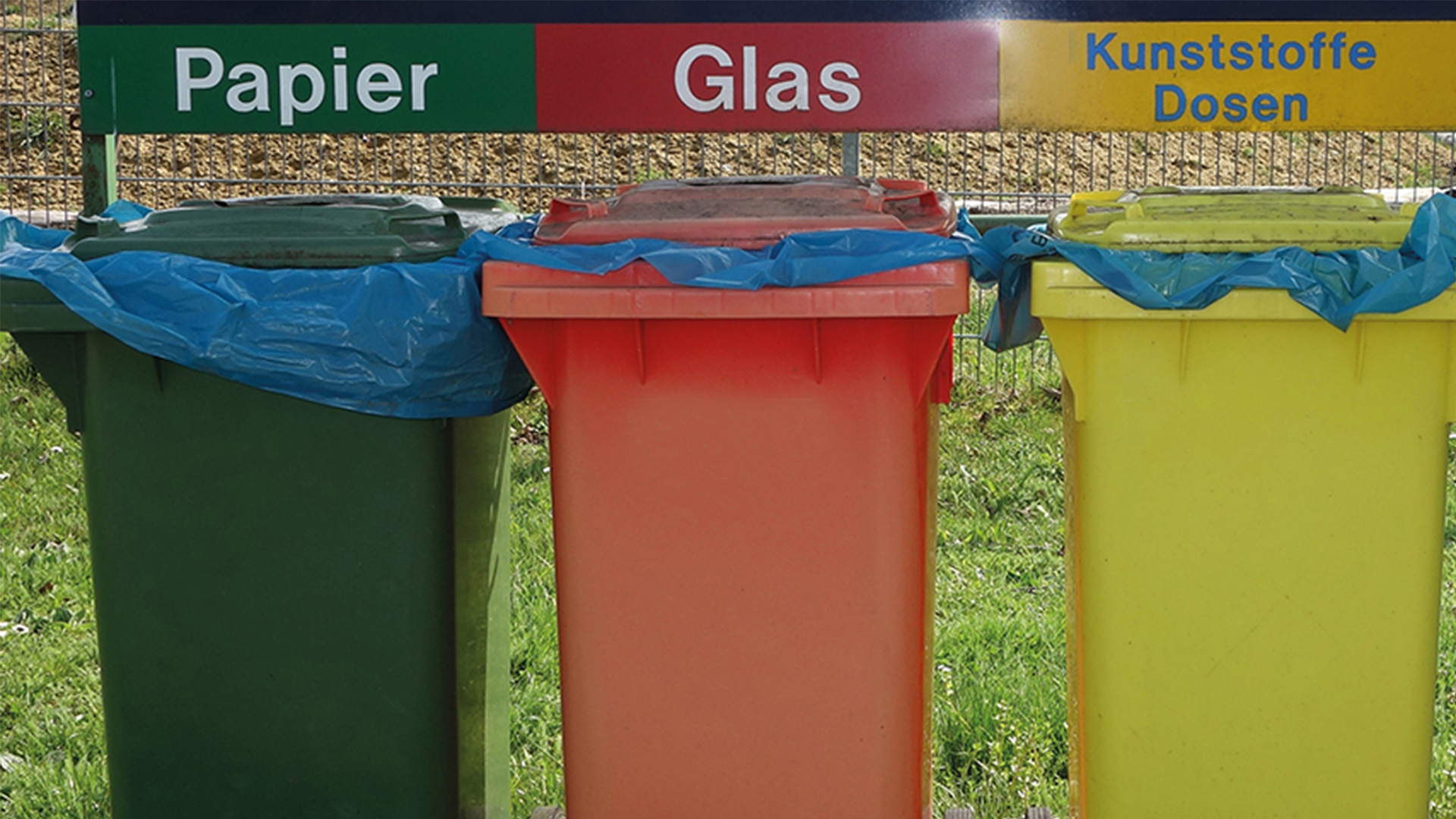
The best waste is the one that never arises in the first place or that can be avoided. Nevertheless, every day many things are thrown as waste into waste paper baskets, dustbins and other refuse containers. Thus enormous amounts of waste are generated which on the one hand, accumulate, and on the other hand, there are still a lot of valuable materials contained in the waste that can be further used. Moreover, raw materials such as oil, which is made into plastics, or ores, from which metals are obtained, are available only in limited amounts on earth. In order to reduce the volume of the waste, which would otherwise be burnt in incinerator plants, and to reuse the raw materials, a law on waste management was passed in Germany already more than 20 years ago, which regulates how waste is to be reused in a sort of circular economy. Certain materials in the waste, such as paper, glass and metal, have been recycled since – that means they are separated from the waste, sorted and reused. The word ‘recycling’ is derived from English and consists of the syllable ’re’ for ‘back‘ and the word ’cycle‘ for ’circle‘. So in recycling valuable materials are to be brought back into a cycle. An example of such a cycle is the hydrological cycle. Over large water areas, water evaporates due to the heat of the sun and thus clouds form in the atmosphere consisting of small droplets of water. These clouds travel over the land and, when it is raining, snowing or hailing, the water falls on the soil surface as precipitation. There it collects in rivulets, streams and rivers and ends up in lakes and the sea where the heat of the sun evaporates it again. So the cycle can start all over again. In recycling the idea of a cycle has been adopted. We start with the new product that can be purchased in a shop. The next step in recycling would be that the packaging or the product itself are thrown into the dustbin after use. At this point in the cycle, the materials must be differentiated and separated as much as possible, so that a cycle can be created in the first place. Then the materials are transported to central collecting points, sorted again and cleaned – because the better a substance is separated from the rest of the waste, the better the cycle works for this substance. Eventually, the substance is processed in such a way that it can be made, as a new raw material, into a new product that can be bought in a shop. Thus the cycle of any recycled substance begins anew.
Play trailer
- <> Languages: DE, EN
- <> Target Groups: GS
- <> Subject: Primary School
- <> Length: 25:53 min
- View in learning platform
Licenses
Curriculum-centred and oriented towards educational standards
Matching
Seal of approval
Quality seals such as the "Bio-Siegel", "Blauer Engel", "Stiftung Warentest" and up to 1,000 other seals represent characteristics such as sustainability, health or safety with regard to a product, a service or even a company.
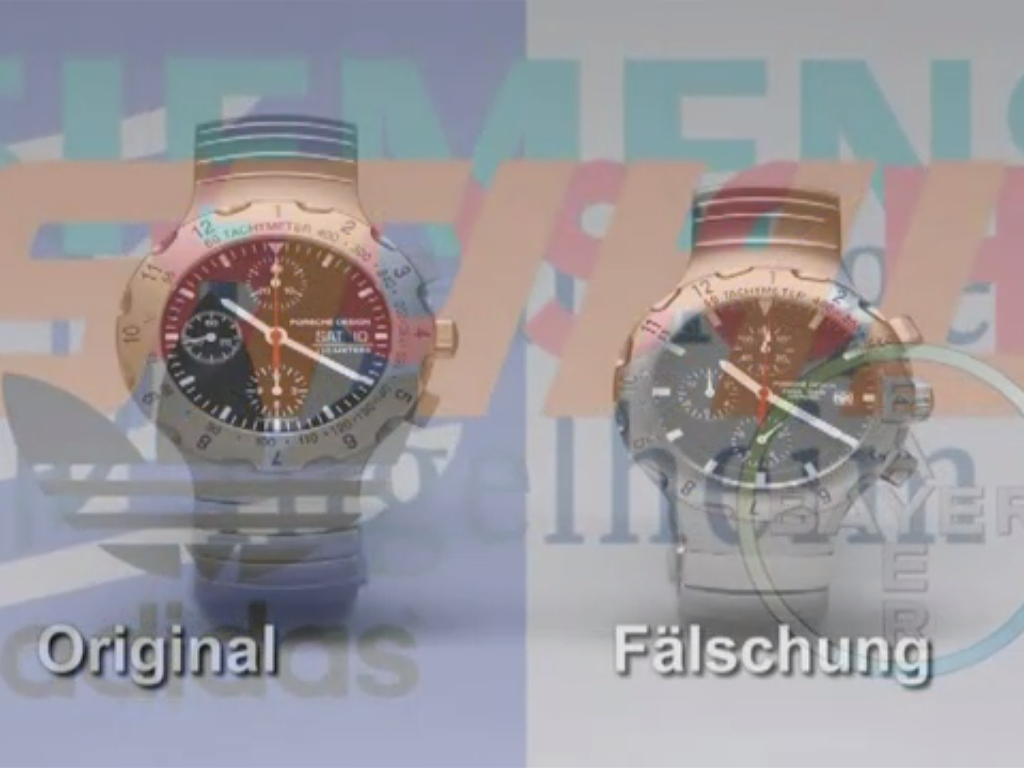
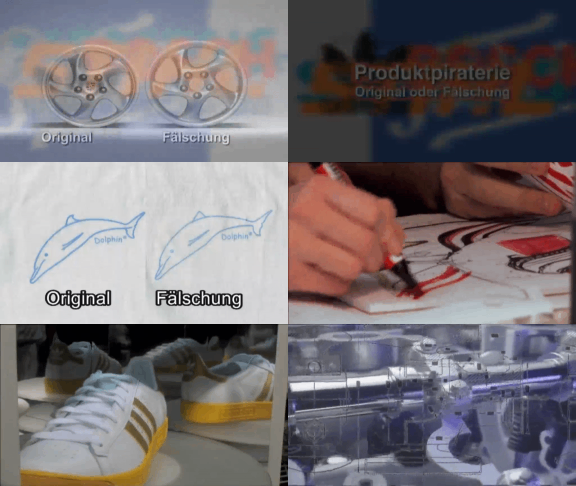
Product Piracy
Counterfeiting takes place in almost all economic sectors – textiles, watches, car parts, machine parts, tools, accessories, software and medicines. Some counterfeits are easy to recognise, others are so well-executed that even experts have difficulty distinguishing between original and imitation. This DVD covers the development of a product from idea to manufacture. Once a product has become a trademark, product pirates appear on the scene.
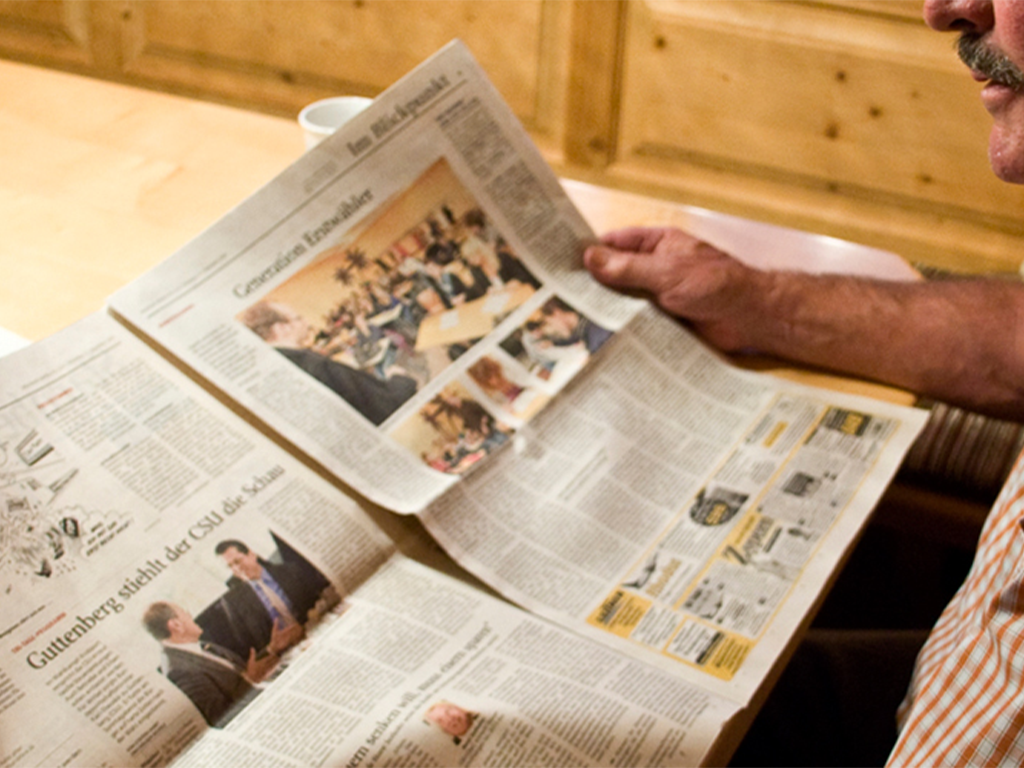
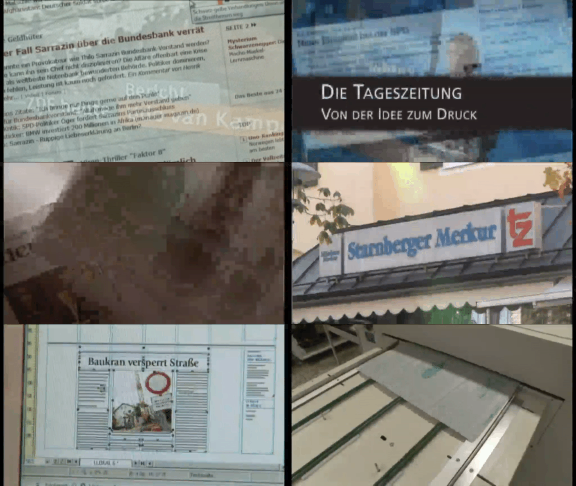
The Daily Newspaper
Every day, there is a surge of news reaching us via different news channels. In spite of TV and Internet, the daily paper still is one of the most important main sources of news. But how is a newspaper created? The film shows the production of a paper in the course of one day. Starting with the editorial meeting in the morning, in which the topics and deadlines are determined, the film accompanies a journalist during her research work. You can see how a journalistic interview is conducted and what the photographer must consider when taking a press photo. Back in the editorial office, the editor’s work is illustrated, which includes the page layout and the writing of an online article in today’s time. Impressive pictures from the printing centre depict the process from the digital page to the finished newspaper. Together with the comprehensive accompanying material, the DVD is perfectly suited for use at school