







 Geography

4656517 / 5551281
Capitals of Central Europe I
Berlin, Bern, Vaduz, Vienna
This DVD presents the German-speaking capitals of Central Europe, Berlin, Bern, Vaduz and Vienna. By way of introduction, the pupils learn about the natural and climatic boundaries of the Central European region and which countries it encompasses. Based on this, the film first focuses on the topographic situation of the respective capital of the countries of Germany, Switzerland, Austria and Liechtenstein, and the history of the cities’ foundation is briefly outlined. To illustrate their function as capitals, the government buildings in Berlin, Bern, Vaduz and Vienna are described but the DVD also goes into the respective infrastructural and economic particularities. Impressive pictures and the accompanying material give a lasting account of the growth of the metropolis of Vienna thanks to its favourable geographic situation at the Danube trade route and the Habsburg dynasty. The traces of Berlin’s division into West Berlin and East Berlin are documented, Bern is shown in its special role as federal capital of Switzerland and capital of the canton of Bern, and Vaduz is introduced as small capital of international repute as a financial centre.
Play trailer
Curriculum-centred and oriented towards educational standards
Matching
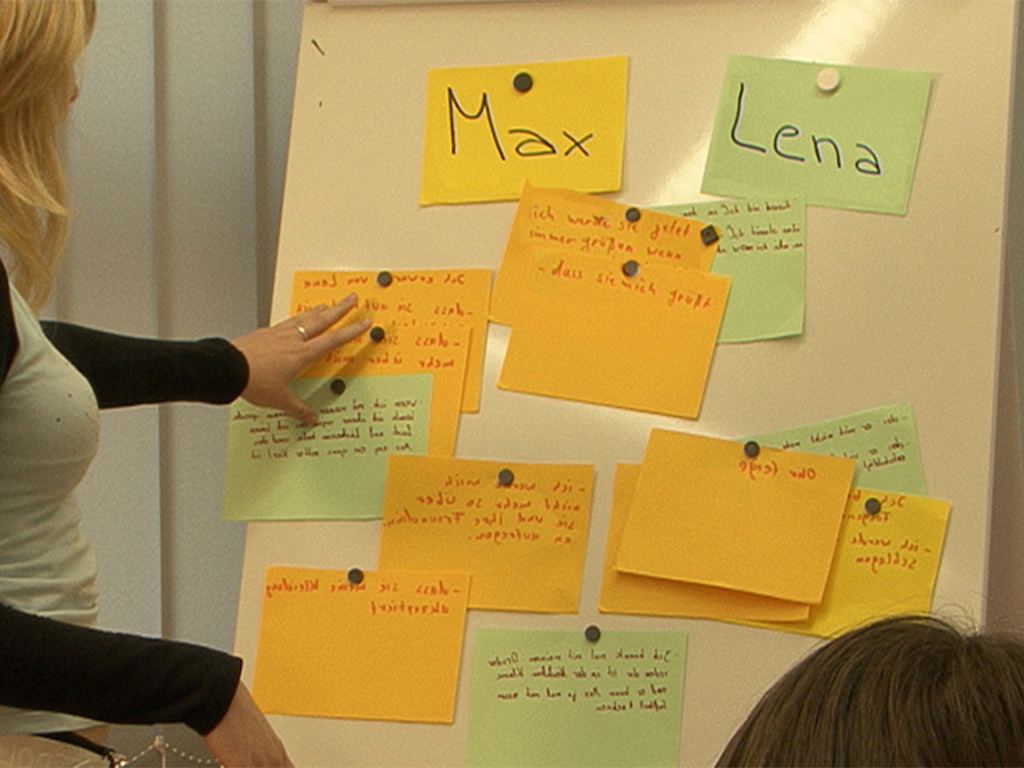
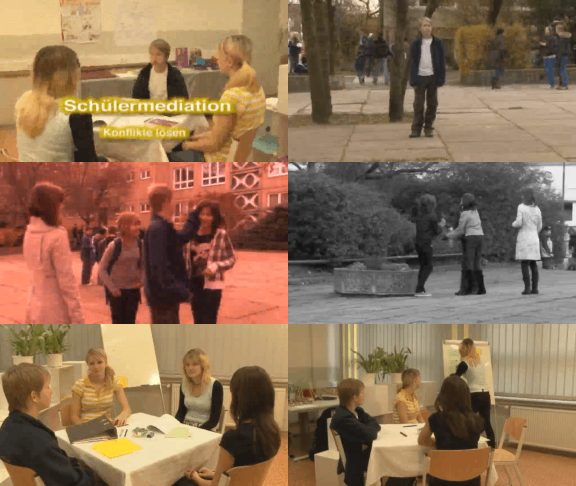
Peer Mediation
Lena and Max attend the 7th form. Max is new in class. During a break, Max notices that Lena and her friend are laughing at him again. Max loses his temper! He slaps Lena in the face. That hurts and Lena runs back into the classroom with a red cheek. The growing conflict between the two has escalated. Just like Lena and Max, every day pupils all over Germany have rows with each other. At the Heinrich Hertz Gymnasium in Thuringia, pupils have been trained as mediators for years. At set hours, they are in a room made available by the school specifically for mediation purposes. The film describes the growing conflict between Max and Lena and shows a mediation using their example. In doing so, the terms “conflict” and “peer mediation” are explained in a non-technical way. The aims of peer mediation and its progress in five steps as well as the mediators’ tasks are illustrated. The art of asking questions and “mirroring”, which the mediators must know, is described and explained. Together with the comprehensive accompanying material, the DVD is a suitable medium to introduce peer mediation at your school, too.

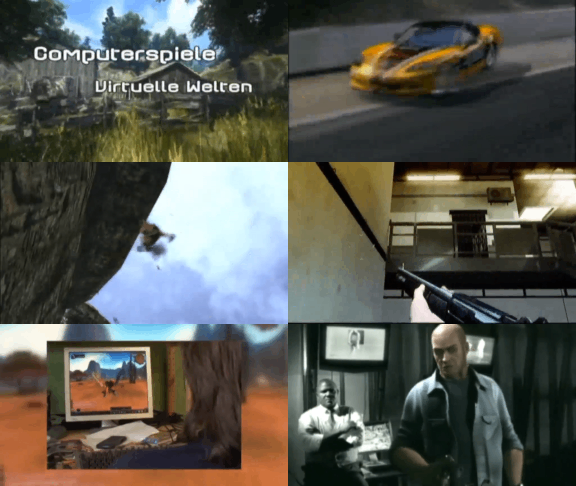
Computer Games
This film covers the topic of computer games in a variety of ways and from many different angles. Apart from the fascina- tion of computer games for users, the historical development as well as the production of computer games are described. The established genres are introduced, the guidelines of the German BPjM are explained. In light of recent public discussions, a neutral overview of the pros and cons of playing computer games is given, and different kinds of player behaviour are outlined. In this film, the pupils will recognise many aspects of their favourite pastime that encourage an independent, constructive use of this medium and reinforce their media competency. The film and teaching material are very closely related to the real-life situation.

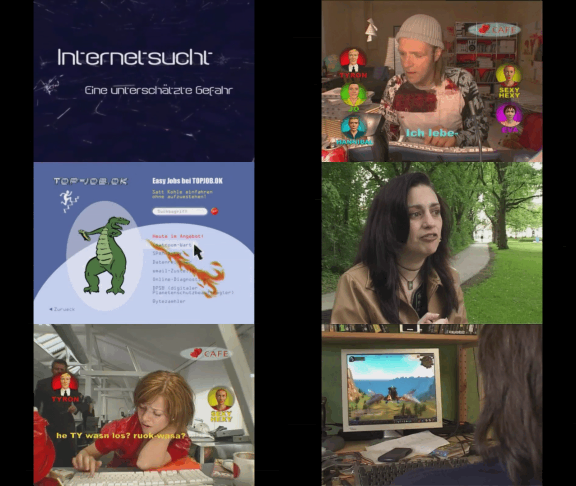
Internet Addiction
The film consists of two parts. The first part is the 15-minute short film “In the Net”. It describes the problem of excessive Internet use in a humorous way, in particular the risk of losing touch with reality when chatting. The second part illustrates with three real persons how Internet addiction can develop and the problems encountered by those who are afflicted. The authentic statements are commented by an experienced therapist. For many pupils, the issues addressed here are related to their everyday lives. What is a “sensible” use of the Internet, where does pathological addiction start? In contrast to addiction to alcohol, nicotine or drugs, the public seems to be largely ignorant of the problem of this addiction, which is not related to any substance abuse. The film provides material for discussion in the classroom (crossdisciplinary) and can be used as a basis for the formulation of prevention strategies.